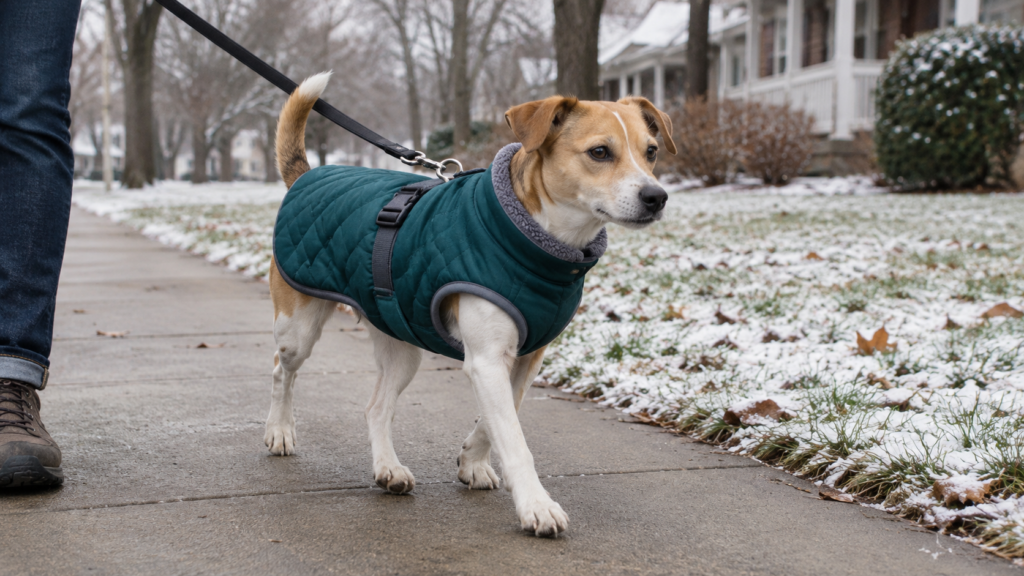
For a small, short-haired dog, choose a winter coat by matching the insulation and weather protection to the walks you actually take. A lightweight, water-resistant vest works well for brisk neighborhood walks in cool, mostly dry weather. A fleece-lined reversible coat adds warmth and wind protection when sidewalks are damp or temperatures stay near freezing. For longer outings in snow, strong wind, or sustained cold, look for broader back and belly coverage, an adjustable collar, and a technical shell that stays in place while the dog moves.
Fit matters as much as thickness. Measure the chest at its widest point, the neck where the collar sits, and the back from the shoulder blades to the base of the tail. A coat should cover the torso without pulling across the shoulders, rubbing behind the front legs, or interfering with urination. Small dogs vary widely in body shape, so use the exact chart for the model and size rather than choosing by breed name or weight alone.
Match the coat to the weather and the walk
| Your usual winter walk | What matters most | Product to compare |
|---|---|---|
| Short neighborhood walks in chilly, mostly dry weather | Light insulation, easy dressing, and freedom through the shoulders | Gooby Puffer Vest |
| Cool, windy walks with light rain or melting snow | Fleece warmth, a water-resistant outer face, and adjustable closures | Kuoser Reversible Dog Coat |
| Longer outings in snow, wind, or sustained cold | Technical insulation, broader coverage, and multiple fit adjustments | Hurtta Expedition Parka |
A short-haired dog has less natural insulation than a dog with a dense undercoat, and a small body loses heat relatively quickly. The ASPCA specifically suggests a coat or sweater for short-haired dogs, ideally with coverage from the base of the tail toward the belly. That makes coverage, fit, and weather resistance more useful buying criteria than simply choosing the thickest-looking jacket. For additional cold-weather context, see the ASPCA cold-weather safety guidance.
Measure before comparing sizes
Use three measurements. With your dog standing naturally, wrap a soft tape around the widest part of the rib cage, measure the neck where the coat will sit, and measure the topline from the shoulder blades to the base of the tail. Add only the amount of room the brand’s chart requests. If your dog falls between sizes, follow that product’s instructions rather than applying one rule to every coat.
After the coat is on, slide two fingers under the neckline and chest area, then watch your dog walk, turn, sit, and step over a low threshold. The front legs should move freely, the fabric should stay clear of the armpits, and the back should not twist to one side.
Three winter coats for small, short-haired dogs
As an Amazon Associate I earn from qualifying purchases.
For light warmth on quick walks — Gooby Puffer Vest
The Gooby Puffer Vest is the lightest option in this comparison. The verified Amazon US variant is blue in size Small, with a listed 15-inch chest. Its water-resistant nylon shell, polyester fill, and zip-up design suit a small dog that needs an extra layer for quick walks without the bulk of a technical snow coat. The back zipper includes a guard, and the built-in dual D-rings make the vest convenient for short outings. Gooby notes that the D-rings are not intended for a strong puller, so dogs that pull should use an appropriate harness arrangement.
| Verified feature | What it changes in the decision |
|---|---|
| Blue, Small; 15-inch chest; model 73010 | This is a specific small-dog variant. Compare the 15-inch chest to the dog’s standing measurement rather than relying on the word “Small.” |
| Water-resistant nylon shell with lightweight polyester insulation | Useful for chilly air and light moisture while keeping the garment easy to pack and wear. |
| Back zipper, zipper guard, and dual D-rings | Fast dressing and leash attachment support quick walks; a separate suitable harness remains the better setup for a dog that pulls strongly. |
This vest fits the mildest weather case in the guide: a short-haired small dog taking a routine neighborhood walk when the main need is a light barrier against wind and chill. A dog spending more time in wet snow or strong wind will benefit from the broader coverage and adjustment found in the next two options.

For damp, windy neighborhood weather — Kuoser Reversible Dog Coat
The Kuoser reversible coat adds a fleece-lined layer and adjustable hook-and-loop closures at the neck and belly. The verified Amazon US variant used here is purple in size Small, model Kuoser-92972-Purple-S. Its solid-colored face is described as the water-resistant side, while the plaid reverse offers a different surface and look. An elastic section at the belly helps the coat adapt to the torso, and the upper-back leash opening allows access to a harness worn underneath.
| Verified feature | What it changes in the decision |
|---|---|
| Purple, Small; model Kuoser-92972-Purple-S | The model and size identify the exact Amazon variant. Check the current listing chart for chest, neck, and back measurements before ordering. |
| Reversible construction with fleece lining and a water-resistant solid face | Offers more warmth than a thin puffer and handles light rain, wind, and melting snow during everyday walks. |
| Adjustable neck and belly closures with an elastic belly panel | Provides more fit flexibility for small dogs whose chest and back measurements do not align neatly with a single pull-on size. |
| Leash opening at the upper back | Allows a leash to reach a harness under the coat without relying on the coat itself as the restraint. |
This is the middle-weather option. It suits a dog that needs fleece warmth and a wind-blocking outer layer for regular winter walks but does not need the extensive adjustments and technical snow coverage of an expedition-style parka. Position the hook-and-loop panels flat so their edges do not rub, especially behind the front legs.

For sustained cold and snow — Hurtta Expedition Parka
The original Hurtta Expedition Parka is the most technical option here. The verified Amazon US variant is Bilberry in the 8-inch regular size, model HU933703. Hurtta developed the coat with short-haired dogs and dogs without an undercoat in mind. It covers the back and major muscle groups, uses adjustable points at the neckline, back length, and collar, and includes reflective piping. The small 8-inch version also has an integrated harness according to the manufacturer information for the original model.
| Verified feature | What it changes in the decision |
|---|---|
| Bilberry, 8-inch regular; model HU933703 | This is an especially short-back variant. Back length is the starting measurement, followed by chest and neckline fit. |
| Adjustable neckline, back length, and collar circumference | Multiple adjustment points help shape the coat around a compact torso and reduce twisting during active movement. |
| Weather-resistant technical shell, warm lining, and extended rear coverage | Better suited to longer walks, snow, wind, and colder conditions where broader muscle coverage matters. |
| Reflective piping and integrated harness on the smallest original sizes | Adds low-light visibility and simplifies the walking setup, while the fit and attachment instructions still need to be checked for the exact size. |
This parka fits the coldest use case in the comparison. Its coverage and adjustment are useful for a small short-haired dog that spends more time outdoors in winter, including dogs with narrow waists, deep chests, or short backs that are difficult to fit in a simple rectangular vest. The current Expedition Parka II has different specifications and sizing, so compare the Amazon listing to the original model described here rather than mixing charts between versions.

Check the exact variant before ordering. Amazon often groups several colors and sizes on one product page, and changing either selection can change the ASIN. Confirm the size, color, chest range, back length, closure type, and model shown in the cart. For Hurtta, confirm whether the page displays the original Expedition Parka or the newer Expedition Parka II because their specifications and charts differ.
How to judge fit when the coat arrives
Start the fit check indoors while the coat is clean. Fasten every closure as intended and observe the neckline, shoulders, armpits, belly, and tail base. The coat should lie smoothly without compressing the chest. A small amount of shifting is normal, but the back panel should not rotate under the belly when the dog turns.
- Neck: The opening should not press on the throat when the dog lowers the head.
- Chest: The dog should be able to take a full stride and breathe normally without the closure pulling.
- Front legs: Armholes and edges should remain clear of the armpits during several minutes of walking.
- Belly: The coat should cover useful torso area while remaining clean and clear during urination.
- Back: The hem should approach the tail base without pressing on the tail or bunching when the dog sits.
Run a hand under the fabric after five to ten minutes of movement. Warm is expected; dampness, excessive heat, persistent scratching, shortened steps, or repeated freezing in place indicate that the fit or insulation level needs another look. For dogs with unusually long backs or deep chests, prioritize the dimension the manufacturer identifies as primary, then use adjustable points to refine the rest.
Coverage, insulation, and water resistance are separate features
A coat can be warm without being highly water resistant, and it can block light rain without providing much insulation. The Gooby vest emphasizes low bulk and light weather protection. The Kuoser coat combines fleece warmth with a reversible outer face and adjustable closures. The Hurtta parka adds a more structured shell and broader adjustability for demanding winter conditions. Those distinctions make the three products useful comparisons even though all appear in the same Amazon category.
Look at the dog’s entire winter setup as well. A torso coat does not protect paw pads from salt, ice, or abrasive grit. Our guide to dog boots for snow and salted sidewalks explains how surface conditions change the type of paw protection worth comparing. Short-haired athletic breeds may also need a coat that preserves shoulder movement, a point discussed in our guide to living with a high-energy Vizsla.
Introduce the coat before the coldest day
Let the dog investigate the coat indoors, then put it on for a brief, calm session. Reward relaxed standing and normal movement. For a zippered vest, hold fur away from the zipper and use the guard. For hook-and-loop closures, smooth the panels so stiff corners do not contact the skin. For a pullover parka, guide the head and front legs without forcing joints into awkward angles.
The first outdoor test can be a familiar short route. Watch how the garment behaves when the dog turns, sniffs, climbs a curb, and urinates. Recheck the closures before extending the walk. A coat that remains centered and allows a natural stride is easier to use consistently throughout the season.
Cleaning and storage affect winter performance
Follow the care label for the exact product. Brush off dried salt and grit, close zippers and hook-and-loop panels before washing, and allow the coat to dry fully before storage. A damp lining can feel cold on the next walk, while grit caught at a closure can create friction. Inspect reflective trim, leash openings, D-rings, elastic sections, and stitching during the season.
If the outer surface stops shedding light moisture, consult the manufacturer’s instructions before applying any treatment. Fabric coatings and membranes differ, and a generic waterproofing product may affect breathability or finish. Store the coat flat or hanging loosely so insulation and shaped panels are not compressed for long periods.
Frequently asked questions
Should I choose a winter coat by my dog’s weight?
Weight can be a secondary reference, but chest girth, back length, and neck measurement determine how a coat sits on the body. Two dogs at the same weight can have very different proportions. Use the chart for the exact model and variant.
How much room should I leave under the coat?
The coat should allow normal breathing and movement without sliding. A practical starting check is whether two fingers fit comfortably under the neckline and chest area, followed by observing the dog walking, sitting, turning, and stepping up. Brand-specific fit instructions take priority.
Is a water-resistant coat enough for snow?
That depends on snowfall, outing length, wind, and how quickly the fabric becomes wet. Light water resistance can suit brief walks in flurries or melting snow. Longer exposure calls for more complete weather protection, secure coverage, and a lining that remains comfortable in cold conditions.
Can the leash attach directly to a dog coat?
Only when the product is designed for that use and the manufacturer says the attachment suits the dog’s walking behavior. Gooby includes dual D-rings but advises against relying on them for a strong puller. Other coats provide an opening to reach a harness underneath. Confirm the exact construction before clipping the leash.
What if my dog’s chest and back fall into different sizes?
Check which measurement the manufacturer treats as primary, then look at the available adjustment range for the other dimensions. A coat with adjustable neck, chest, or back length can accommodate more body shapes than a fixed pull-on vest. Do not assume sizing up will solve every mismatch, because extra length can interfere with the tail or urination.
Can a small dog wear a sweater under the coat?
Layering changes the chest and neck measurements, so both pieces need enough room for unrestricted movement. Recheck the fit with the sweater underneath and make sure seams, zippers, and closures do not stack in the same pressure point. A coat selected for layering may require a different size than one worn directly over the fur.