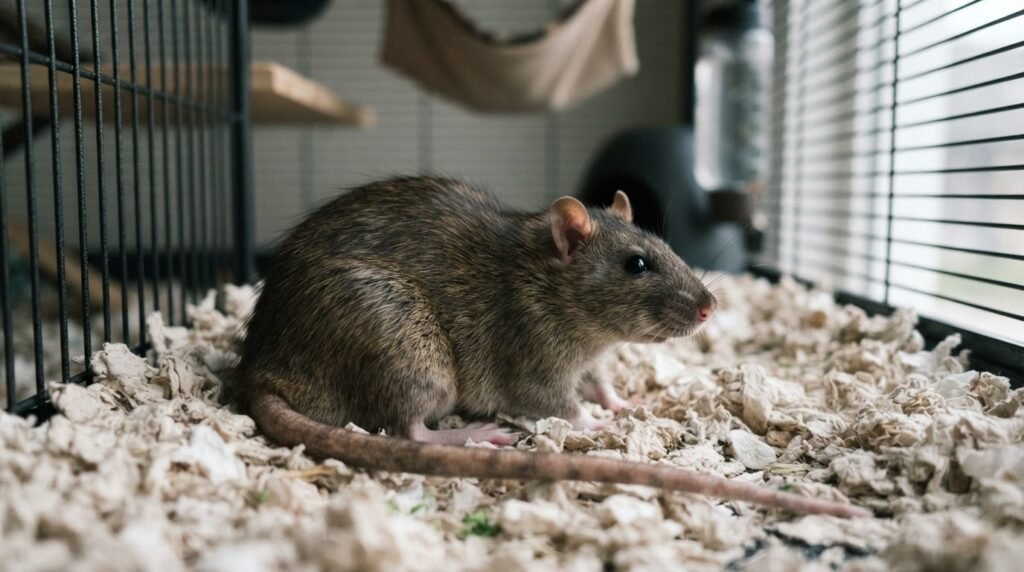
For most pet rats, a good starting point is unscented, absorbent paper bedding or low-dust aspen shavings. Check the actual handful that will go into the cage. It should be dry, comfortable underfoot, and loose enough for a rat to move around with its nose. Leave heavily dusty, musty, or perfumed material out of the enclosure. Even a suitable bedding needs regular attention where rats urinate, sleep, and spill water.
If a rat is already sneezing repeatedly, breathing noisily, or eating less, call a veterinarian who sees rats. Open-mouth breathing, obvious effort to breathe, or collapse needs emergency care. Clean bedding supports a healthier environment, but a change of substrate cannot tell you whether a rat has an infection or treat breathing trouble. Give the clinic a description of what you hear or see, when it started, and whether other rats are affected.
Think about the cage at a rat’s height
A person standing next to the cage samples different air from a rat sleeping in a small house. The cage can smell fine by the door while bedding under the house is saturated. Urine on bedding, shelves, and cloth can contribute to ammonia buildup. A covered corner with little airflow is a good place to check first. Dust is another issue. When a rat digs, its nose is right beside the particles the digging releases.
Look at how air moves around the enclosure as well as what covers the floor. A ventilated cage placed away from smoke, aerosol sprays, and direct drafts gives the bedding a better chance to stay dry. A solid floor or tray can hold loose material without making the animal walk on wire. Our guide to planning a pet rat’s habitat covers how shelves, shelters, and the base tray fit together.
Compare materials by the job they do
A floor covering absorbs moisture and gives rats a surface to move through. Nest material serves a different purpose. A rat may carry strips of soft plain paper into a sleeping spot even when the rest of the enclosure is bedded with aspen. A liner on a shelf has yet another job. Decide which surface you are trying to improve before replacing everything in the cage.
| Material | Where it can work | What to check |
|---|---|---|
| Unscented paper bedding | Loose base layer | Inspect for fine dust and dampness below the surface. |
| Low-dust aspen | Digging area or base tray | Look for clean shavings without splinters or powder. |
| Plain paper strips | Nest material inside a shelter | Replace when wet and keep absorbent bedding below. |
| Washable fleece | A securely covered shelf | Inspect the underside, edges, and absorbent layer daily. |
With paper bedding, read the complete label. Plain white and natural-colored versions can both work. The important details are the material, absence of added fragrance, and how the batch behaves once loosened. A light color can make a wet patch easy to locate. A dark patch beneath a bottle may mean a leak, though you still need to check whether water is flowing properly and whether a rat can reach the nozzle comfortably.
As an Amazon Associate, Paws & Spells earns from qualifying purchases.
The plain white Kaytee Clean & Cozy version gives you a light-colored surface where a damp corner is easy to see. Check the label for the unscented version and loosen a handful away from the cage to inspect the actual batch.

Aspen is a hardwood available as shavings for small animals. Look for clean pieces with very little fine powder and no sharp splinters. Ordinary workshop shavings can contain unknown woods, finishes, or fine sawdust. A bag identified only as wood shavings gives you little information about the wood or its processing. The American Fancy Rat and Mouse Association describes bedding choices in its general care sheet.
Kaytee’s aspen bedding is a loose hardwood option for a base tray where your rats dig. Check the shavings for dust and rough pieces as you fill the tray, and put softer plain paper within reach for nest building.

What to leave out of the cage
Avoid cedar bedding, fragranced litter, dusty sawdust, and clumping cat litter. Added perfume can make it harder to locate the source of a smell or judge when a patch has become wet. A fresh bag that smells strongly of a fragrance in the store will smell just as strong in a small sleeping compartment. Read the front and back of the package even if the color or brand looks familiar from your last purchase.
Look closely at textiles too. A little hole in a fleece liner can open into an entrance that a rat crawls under. Loose loops or unraveling threads can catch a foot. If you use cloth on a platform, secure it so it lies flat, check the edges and fasteners, and remove damaged material. Check underneath when you lift it. A surface that feels dry to your fingers can hide a wet absorbent layer below.
A practical first setup
Start with a clean, dry tray and spread the loose material without packing it down. Leave enough room around ramps and entrances for the rats to move comfortably. The water nozzle should remain reachable after the bedding settles. Place a handful of plain, unscented paper nesting material near a shelter and let the rats arrange it. Keep a substantial area of loose substrate available for digging even if you use washable covers on some shelves.
Watch the first active period after changing the setup. Where do the rats go to sleep? Do they push all the bedding out from under a hide? Does a ramp land in a patch they repeatedly soak? Those details can guide small changes. Moving a shelter a few inches or keeping extra substrate handy for a favored corner may solve more than replacing the whole floor with a thicker layer.
With multiple rats, one may drag most of the nesting paper into a favorite hide. Offer material in another location and make sure there are other comfortable resting places. Note which individual is eating, moving around, or staying apart if something seems unusual.
Build a cleaning routine around the wettest spots
During the daily food and water check, lift the hide, look beneath the drinking area, and inspect the shelf where the rats spend the afternoon. Remove damp bedding down to the tray and wipe up any liquid underneath. Refill with dry material. If you only sprinkle clean bedding over a wet corner, the problem remains hidden underneath, where it can persist until the next full clean.
An enclosure with several rats may need attention more often than another enclosure of the same size. A leaking bottle can soak a corner in an afternoon. Check sooner after introducing a new substrate or changing the layout. When most of the bed is soiled, the tray stays damp, or odor quickly returns after spot cleaning, take the rats to a secure temporary space and clean the whole base.
Empty the tray gently so dust stays out of the rats’ immediate surroundings. Clean the hard surfaces, rinse away cleaner, and let them dry before replacing the bedding and returning the animals. Wash reusable liners with an unscented detergent and dry them fully. Keep a spare liner ready if that shelf is part of the rats’ usual route to water or to a sleeping area.
How to tell whether the new bedding is working
Compare like with like. Check the same places at roughly the same time after cleaning, with the same number of rats in the enclosure. Is the bottom of the bedding beneath the house still dry? Can you remove one saturated patch without having to throw out half the tray? Are there clouds of powder where the rats have pushed the bedding into a mound? These observations tell you more than how clean the top layer looks in a photograph.
Keep the package label and lot information until you finish a new bag. Store it where it will stay dry and out of reach of cleaners and pests. A musty smell, damp clumps, or signs of contamination are reasons to set the material aside. A larger bag is convenient only if you can keep the last portion in as good condition as the first.
If you are trying to work out why a rat is sneezing, record when the signs occur and which changes you have already made. Note smoke, recent cleaning products, or work in the room as well as a change in bedding. If the rat is comfortable, a brief recording of the sound can help the veterinary team. For a rat in distress, call immediately and follow the clinic’s transport instructions.
Frequently asked questions
Can I use shredded paper from my desk?
Plain, clean, unscented paper strips can provide material for nest building. Remove tape, staples, and plastic windows. Avoid glossy stock, receipts, or papers that may have picked up chemicals. Check how well the actual base of the cage absorbs moisture before relying on paper strips alone as the floor covering.
How can I tell if a wet corner comes from the bottle?
Dry the area and watch the bottle after refilling and securing it. Check that the seal holds and that water also comes out when the nozzle is touched. Make sure your rats have a reliable source of water throughout the check. Inspect the bedding beneath the bottle again later that day.
Should I switch every rat to fleece if one starts sneezing?
First tell your veterinarian about the affected rat. Check the current bedding for dust and dampness and consider other changes in the room. A switch to fleece creates a different cleaning routine and does not establish what caused the sneezing. Follow any temporary housing directions your veterinarian gives.
Does an odor-control label mean I can clean less often?
Inspect the usual wet spots regardless of the wording on the bag. Some products absorb moisture well, but packaging cannot predict where your particular rats urinate or when a bottle might leak. Use the condition of the tray and sleeping areas to decide when to replace material.
What should a sitter check while I am away?
Show the sitter where your rats sleep and which shelter lifts off for a quick inspection. Demonstrate a bottle check and leave the usual bedding within reach. Ask for an update if an area is unusually wet, a rat seems less active, or breathing sounds different. Leave the contact details for your regular clinic and an emergency clinic that sees rats. Keep the carrier and a small supply of familiar bedding together for a quick departure. Our guide to preparing a pet emergency kit covers records and supplies to pack ahead of time.