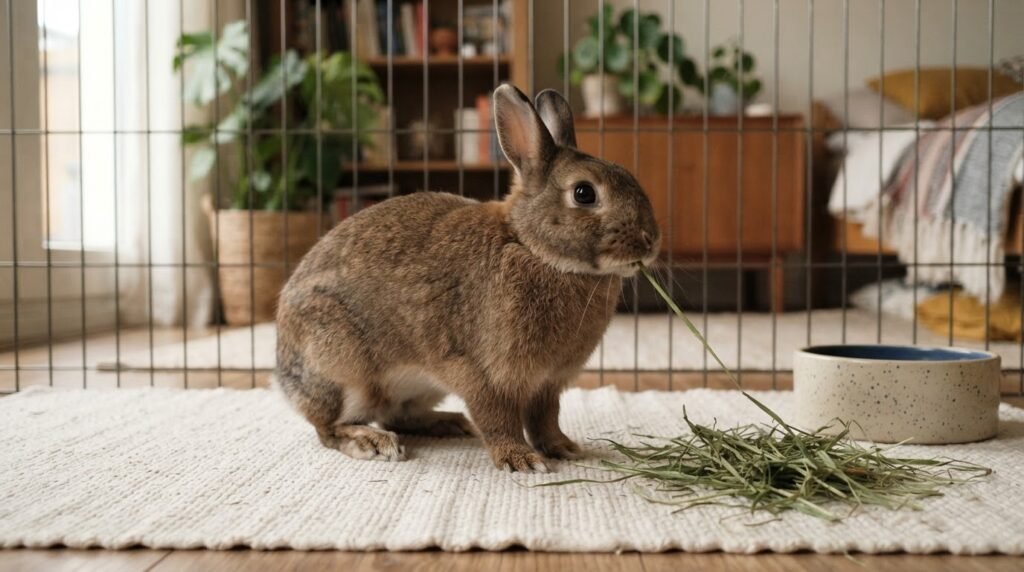
For most healthy adult rabbits, the best everyday hay is fresh grass hay they willingly eat throughout the day. Timothy is a good starting point. Orchard grass is an equally reasonable choice for a rabbit who prefers softer leaves. Both can stay on offer, and neither needs to be rationed. Alfalfa has a different role, especially for growing rabbits. Before choosing a bag, consider your rabbit’s life stage, how the hay looks and smells, and whether you see your rabbit chewing it.
If your rabbit usually dives into the hay and suddenly leaves it untouched, check whether they are eating anything and passing their usual droppings. A marked decline in appetite or droppings warrants a prompt call to a rabbit-experienced veterinarian. A rabbit who stops eating or passing droppings needs urgent care. Trying a different variety can wait. The Rabbit.org Foundation describes other signs that a rabbit may be sick.
Why rabbits need a pile they can graze from
Watch a rabbit work through a handful of hay. They pull out a stem, chew it with a side-to-side motion, and reach back for another. That prolonged chewing helps wear their continuously growing teeth. The long strands also supply fiber that supports normal movement through the digestive tract. A rabbit can finish a small bowl of pellets in minutes and still need many opportunities to graze over the rest of the day and night.
Hay supports dental health, but even a rabbit with excellent eating habits can develop painful teeth. If one starts dropping pieces, chewing on one side, or accepting only soft foods, tell your veterinarian what changed. Being able to bite off a piece of lettuce tells you little about how comfortably that rabbit can grind a stalk with their back teeth.
Which variety belongs in the feeder?
Timothy, orchard, oat, and meadow hay can all be grass hays. The name describes the crop or mixture. The time of harvest, weather, and storage affect what comes out of any particular bag. Two perfectly good batches of timothy can feel different in your hand. The House Rabbit Society’s feeding guide explains how grass hay and alfalfa fit into a rabbit’s diet at different ages.
| Hay | What to look for | When to consider it |
|---|---|---|
| Timothy | A mix of stems, leaves, and seed heads | A daily grass hay for a healthy adult. |
| Orchard grass | Often soft, with broad, pliable blades | A daily option for a rabbit that prefers leaves. |
| Oat hay | Grass stems with a different texture | Another grass hay to offer alongside familiar forage. |
| Meadow hay | A mixture of grasses that varies by harvest | Choose a clean, feed-grade batch with a clear description. |
| Alfalfa | A leafy legume, richer than grass hay | Often used during growth. Ask your vet about individual needs. |
A young rabbit may already be eating some grass hay alongside alfalfa. Ask the veterinarian who knows your rabbit when to shift toward an adult diet, particularly if you adopted a rabbit of uncertain age. Alfalfa is a legume and generally supplies more protein and calcium than grass hay. A rabbit losing weight, nursing a litter, or recovering from illness needs an individual feeding plan. Weight loss by itself is a reason to call the clinic before changing the daily ration.
Compare texture and freshness in the same handful
Spread a handful on a clean surface. Look for recognizable leaves and stems you can separate with your fingers. Some pale blades and a little fine material are normal in a harvested crop. A bag that releases clouds of dust, smells musty, feels damp inside, or contains visible mold should stay out of the feeder. If you find a patch of mold, set aside the whole affected package and use a fresh supply.
A rabbit who sorts through stalks may be looking for the leaves, while another eats the flower heads first. Offer a small sample of a second plain grass hay next to the familiar pile so you can see which pieces disappear. Compare similar amounts at the same time of day. If you are testing a new batch, keep enough of the previous one on hand to maintain normal intake while you decide.
As an Amazon Associate, Paws & Spells earns from qualifying purchases.
Oxbow’s 40-ounce Western Timothy bag is one example of plain grass hay with leaves and stems. Look at how much of each your rabbit eats when you offer a fresh handful.

Oxbow’s 40-ounce Orchard Grass bag offers a softer, leafier grass to try alongside timothy. Put a little in a separate spot at first so you can tell whether your rabbit chooses it.

Make the hay easy to reach
Put a generous loose pile where your rabbit already spends time grazing. Many rabbits enjoy eating beside their litter box. Keep the hay within easy reach of all four feet on a stable surface and clear of wet litter. A second pile can make a difference for a bonded pair. Watch whether both animals can eat at the same time without one blocking the other’s path or sitting in the only dry pile.
If you use a feeder, watch your rabbit pull out several strands. Hay can look plentiful through the bars while the opening is empty or the contents are packed too tightly to pull free. Choose an arrangement where the rabbit can reach the food without pushing their head through a gap or climbing into a bag. A loose pile on a clean tray also lets a rabbit with limited mobility graze at floor level.
Refreshing a pile gives a rabbit a chance to investigate new smells. Split a handful between two familiar spots, or tuck a little into a plain, open cardboard box with ample openings. Keep the main supply freely accessible. For ideas on building foraging into ordinary exercise time, see our guide to indoor enrichment for rabbits.
Tell eaten hay from scattered hay
Before clearing the pen, take a look at where yesterday’s hay went. A full tray of dry stems beside a pile of crumbs means something different from a pile that has simply slid under a shelf. Notice whether your rabbit picks up strands, chews steadily, and returns for more. With a pair, watch each rabbit for a few minutes. Seeing one enthusiastic eater can make it easy to overlook the quieter animal.
Check that the water bowl is clean and accessible and that any bottle is flowing. Note changes in droppings alongside changes in eating. A quick record of when your rabbit last grazed normally, which other foods they have taken, and whether the droppings are smaller or fewer gives the clinic something concrete to work with if you need to call. Never withhold familiar food to force a rabbit to eat a new hay.
Large amounts of pellets or treats can also leave less room for grazing. Measure the rabbit’s usual pellet portion so everyone in the household knows whether it has already been served. Our guide to choosing and serving rabbit pellets explains their place alongside hay. Discuss substantial diet changes with your veterinarian, especially for a young, senior, or underweight rabbit.
Buy an amount you can keep fresh
Think about where the next bag will sit before choosing its size. A large box may be practical for a household with several rabbits and a dry storage area. A smaller package may work better in a home with limited space or humid weather. Look inside each new delivery before finishing the old one so you have time to replace an unsuitable batch without running out of food.
Keep hay dry, shaded, and away from strong odors, water leaks, and household cleaners. Follow the supplier’s storage instructions and allow ventilation. Leave the main supply where pets cannot climb into it or soil it. Use clean, dry hands or a scoop when refilling a smaller container. Old fragments left in the bottom make it harder to tell whether the next batch arrived dusty.
If you buy from a local grower, ask which grasses were harvested and whether the bale is meant for animal feed. Check the interior as well as the outside when you open it. Keep the supplier’s details and the lot information from packaged hay until that batch is gone. A picture of the label can save you a search if you find a quality issue halfway through the bag.
Frequently asked questions
Can hay cubes replace a loose pile?
Keep loose grass hay available for a healthy rabbit. A compressed cube changes how the rabbit selects and chews individual strands. If a medical or dental problem makes long strands difficult, ask your veterinarian about suitable forms of fiber and follow the feeding plan they prescribe.
Does the cutting number tell me which hay is best?
It offers a clue about texture. An earlier cutting may be stemmier and a later one leafier, but harvest conditions vary. Open the bag, check its condition, and watch what your rabbit eats. A cutting number alone cannot tell you how this particular batch will suit your rabbit.
Can two adult rabbits eat different grass hays?
Yes. If both are healthy and have no special diet restrictions, offer more than one kind in accessible piles. One rabbit may prefer orchard while the other chooses timothy. Check that each is actually eating and that neither animal is guarding the feeding area.
Is straw the same as hay?
No. Straw is typically the dried stem left after a grain crop is harvested. It has a different nutritional role and cannot serve as your rabbit’s daily forage. A rabbit that enjoys burrowing through straw bedding still needs a separate supply of fresh, edible grass hay.
Should I empty the feeder before adding more?
Remove wet, soiled, or spoiled material as soon as you find it and clear accumulated fine debris. Add fresh hay while clean strands are still available. The goal is for your rabbit to be able to reach clean forage overnight and between refills as easily as just after you tidy the pen.