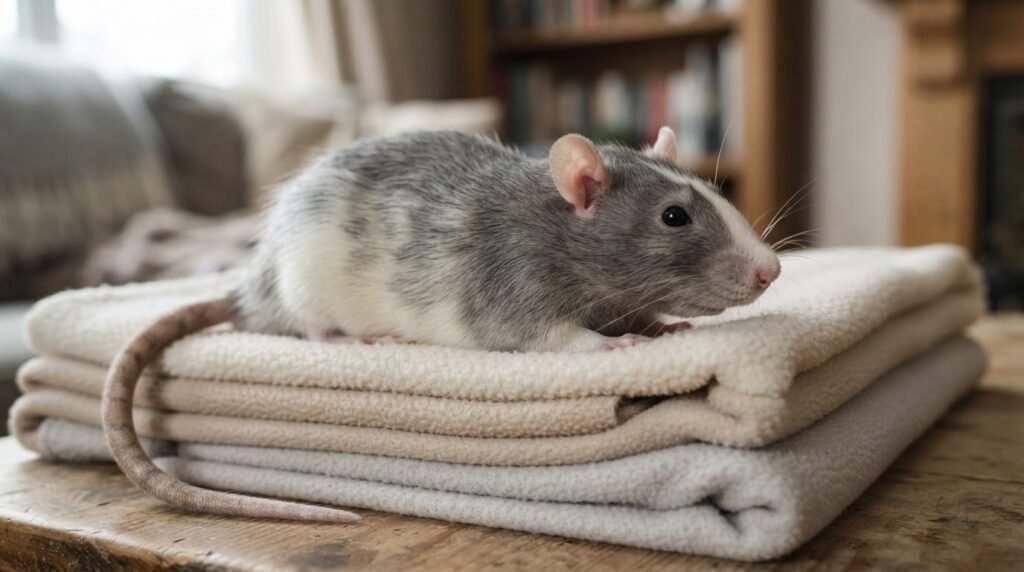
A pet rat settles beside you, makes a faint grinding sound, and suddenly its eyes seem to pulse in and out. That brief movement is called boggling. It happens because part of the muscle that moves the lower jaw passes behind the eye. When a rat grinds its front teeth vigorously, the muscle contractions can move the eyes in rhythm with the jaw. Once the grinding eases, the eyes should look as they usually do.
Rats often do this while resting comfortably, which is how boggling earned its reputation as a sign of happiness. But teeth grinding can also accompany stress or pain. Look at what the rest of your rat is doing. A rat stretched out beside a familiar companion presents a different picture from one hunched in a corner and leaving dinner untouched. If an eye stays pushed forward, appears injured, or will not close, seek veterinary attention promptly. Open-mouth breathing or struggling for breath is an emergency.
What to look for when a rat boggles
Start with the jaw. From the side, you may see little movements beneath the cheek and rapid movement of the lower jaw. If the room is quiet, you might hear a dry, soft rasp. The sound comes from the incisors rubbing together, a behavior known as bruxing. The visible movement of the eyes has its own name because you can hear bruxing many times without ever seeing the eyes move.
Now look at the timing. In a typical boggle, the eye movements come in a short run that tracks the jaw activity. The eyes briefly look more prominent and then settle. They are not scanning the room from side to side. A still photo can capture the most startling instant while omitting the completely ordinary moment immediately afterward. A short video, with the jaw and eye both in frame, conveys what the photo misses.
Some owners first notice the whiskers. A rat exploring an unfamiliar corner may move its whiskers back and forth and turn its nose toward a sound. That active investigation looks different from the rhythmic eye movement of a rat lying quietly in a hammock. Another easy mix-up happens at dinner. A rat holding a pellet between its paws and working its jaws is visibly eating. Watch after it puts the food down before deciding that the movement you saw was boggling.
Reading comfort in context
Imagine a rat that climbs into your lap on its own, settles its weight, and begins to grind its teeth while you stroke its shoulder. You pause. The rat stays there or leans toward your hand; after a while it gets up and goes exploring as usual. In that sequence, comfort is a reasonable interpretation. The most informative detail may be that the rat could leave at any time.
Now imagine hearing a similar sound on the way to the veterinarian. The carrier has just been lifted, the rat is tucked tightly into a corner, and a dog is barking nearby. The grinding does not tell you the journey is enjoyable. Keep the carrier secure, move away from the disturbance when practical, and explain what you observed to the clinic. You do not need to open the carrier in an unfamiliar waiting room to test your interpretation.
It also helps to know what the rat looks like at its most ordinary. Spend a little time watching at a familiar hour without opening the cage. You might see a brief wash of the face, a pause beside a companion, then a trip to the food dish. Later, when one detail looks unusual, you have something specific to compare it with. Two rats sharing the same home can have very different habits.
A quick guide to the next step
| Observation | Useful response |
|---|---|
| Eyes pulse with jaw movement, return to normal, and the rat resumes its usual activities | Note the context and let the rat continue. |
| Grinding during handling while the rat tries to move away | Pause handling and offer a secure place to retreat. |
| One eye remains prominent or looks painful after the jaw stops | Contact a rat-experienced veterinarian promptly. |
| The rat struggles for breath or breathes with its mouth open | Seek emergency care immediately. |
The distinction between moving and staying prominent matters. Stand where you can see the face without tipping the rat onto its back or shining a bright light in its eyes. Once the jaw is quiet, does the eye return to its usual outline? If one eye still looks enlarged, the lids cannot close normally, there is cloudiness or discharge, or the rat keeps rubbing its face, call a veterinarian. Skip home eye drops unless the veterinarian caring for this rat directs you to use them.
When the teeth or breathing need attention
Rats’ front teeth grow throughout life. Ordinary wear depends partly on how the opposing teeth meet. Hearing grinding does not prove they are lined up correctly. A rat may pick up a familiar piece of food, work at it, and drop it several times. Food may disappear from a shared dish because a cage mate ate it. Watch the individual rat handle and swallow its usual food when you are unsure whether it has actually eaten.
If meals suddenly take much longer, saliva wets the fur beneath the chin, or a rat loses interest in food, call a veterinarian who sees rats. Describe the change and when you last saw the animal eating normally. Do not attempt to clip or file the teeth at home. An examination can tell the clinician whether a tooth, an injury, or another problem is interfering with eating. Buying a harder chew cannot establish why a rat has started dropping food.
Listen for when a sound occurs. Does it coincide with jaw movement, or does it repeat with each breath after the jaw has stopped? Breathing that takes obvious effort, especially with the mouth open, needs immediate care. Do not spend time recreating a quiet setting or waiting to capture a perfect recording. Call an emergency clinic and tell them that a rat is having difficulty breathing so they can direct you to appropriate care.
Give the rat a choice during handling
You can learn a great deal by stopping an interaction briefly. Offer a hand close to a secure resting spot and allow the rat to approach. If it walks away when you stop stroking, let it go. If it remains beside you, quiet company may be what it wants at that moment. Boggling is an observation you may make along the way, not a behavior you need to produce by touching a particular spot.
A rat that disappears into a hide may be resting, especially if the household is active when the rat would normally sleep. Look at the next familiar event, such as the evening meal or its usual opportunity for supervised time outside the cage. A rat that comes out readily then is giving you different information from one that stays withdrawn through activities it normally enjoys. A meaningful change in appetite or activity deserves attention even if you have also seen a perfectly typical boggle.
Make everyday observation easy. Arrange familiar resting places so a rat can choose cover and you can still see it come and go. Our guide to setting up a pet rat habitat explains how the cage layout supports those choices. The goal is a home where the rat can rest, interact with compatible companions, and explore without anyone having to move furniture just to see whether dinner was eaten.
What a useful note or video includes
Start a clip before moving closer, if possible. Keep the whole head in the frame and include a few moments after the movement stops. Leave the original speed and sound intact. A slow-motion replay can make tiny movements visible, but it removes the rhythm that helps a veterinarian interpret them. Record the setting in a sentence, especially if travel, a loud noise, or handling immediately preceded the episode.
A practical note might read, “Tuesday evening, resting beside cage mate; both eyes pulsed briefly with the jaw; got up and ate usual food afterward.” A different note might say, “Wednesday morning, left eye still prominent once jaw stopped; turned away from usual food.” The first is an observation to keep. The second describes a change worth calling about. Counting episodes alone would hide the most important difference between those two days.
Before someone else cares for your rats, point out each animal and describe one habit the sitter can recognize. Leave the clinic number, after-hours contact, and directions for reaching you. Our backup pet-care planning guide can help you put that information in one place. If you are still looking for a clinician familiar with rats, Humane World for Animals notes that a local shelter or rescue familiar with rats can help connect owners with a veterinarian.
Frequently asked questions
Can a rat brux without boggling?
Yes. Bruxing is the grinding of the front teeth. Boggling is the visible effect that stronger jaw contractions can have on the eyes. Hearing the sound without seeing eye movement is entirely possible. Use the rat’s posture and activities to put the sound in context.
Is a rat unhappy if I have never seen it boggle?
There is no daily quota. Your rat may do it where you cannot see its face, or you may simply never observe it. Choosing to approach, exploring at its usual time, eating comfortably, and resting with familiar companions give you a broader picture of daily life.
Can a photograph tell me whether my rat’s eye is healthy?
A photo can document how an eye looks now and can be useful for comparison with an earlier picture. It cannot show whether a change tracks the jaw or persists afterward. Contact your veterinarian about a new, persistent difference even if your rat still accepts a treat.
Should I separate cage mates when one rat starts boggling?
Boggling alone is no reason to interrupt compatible rats resting together. Check what was happening first. Quiet grooming and settling side by side are different from chasing that leaves one rat trapped or injured. Any injury needs attention in its own right.
What should I mention first when I call the clinic?
Lead with the change that concerns you most. Say immediately if breathing is difficult, an eye is injured, or the rat cannot eat. Then describe the timing of the jaw and eye movement, whether it stopped, and how your rat behaved afterward. Those details help the clinic judge urgency.