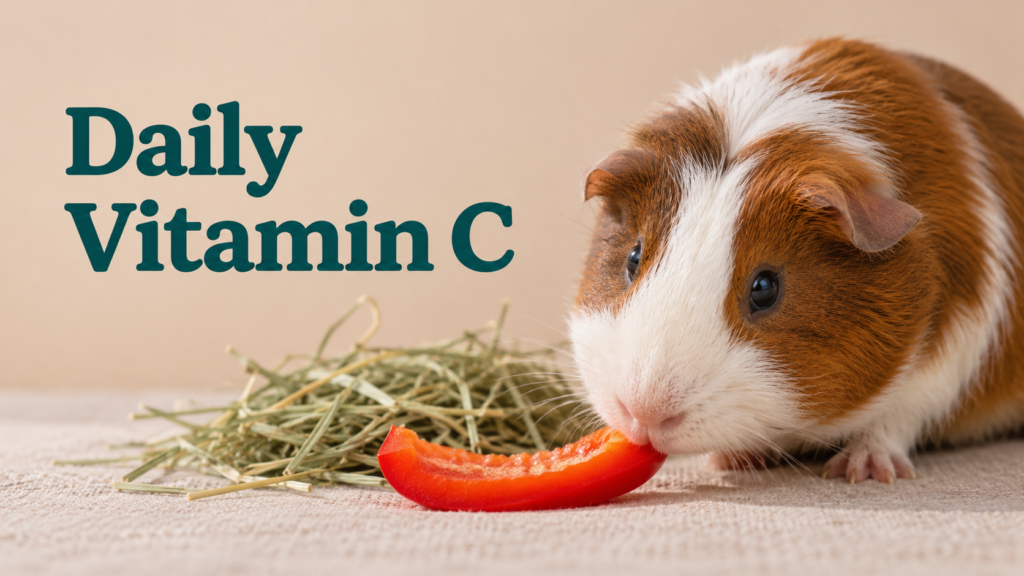
Guinea pigs cannot make their own vitamin C. Two dependable food sources are fresh pellets fortified for guinea pigs and vegetables rich in the vitamin, such as bell peppers. Grass hay belongs in the enclosure around the clock for digestion and dental health, but it cannot reliably meet the vitamin C requirement.
Watch an ordinary meal before deciding whether the diet needs changing. In a shared enclosure, one guinea pig may eat most of the peppers while its companion gets very little. A guinea pig that comes to the bowl but repeatedly drops food needs a veterinary assessment. If it stops eating altogether, seek urgent care.
Why guinea pigs need vitamin C every day
Vitamin C helps your guinea pig make collagen, a protein that supports tissues such as the gums, skin, and blood vessels. It also supports wound healing. When a guinea pig consistently gets too little vitamin C, those tissues can become weaker and the animal can develop a deficiency called scurvy. A guinea pig with sore joints may move less, and one with sore gums may have difficulty eating. Eating less can make the original nutrition problem worse.
The MSD Veterinary Manual’s nutrition guide gives a typical adult dietary requirement of 10 to 25 milligrams of vitamin C per kilogram of body weight each day. That figure covers the total from food and any supplement combined. Growing, pregnant, nursing, or ill guinea pigs can have higher needs. If yours is in one of those groups, ask your veterinarian to review what it is eating before adding a product.
Build the diet around hay, pellets, and fresh vegetables
For most healthy adult guinea pigs, the daily routine starts with constant access to clean grass hay, such as timothy hay, and fresh drinking water. Hay provides the fiber your guinea pig needs for normal digestion. Chewing it also helps wear down teeth that grow throughout life. A measured serving of guinea pig pellets and a variety of fresh vegetables complement that hay. Keep all three parts in mind when you review what your pet eats over a typical day.
| Part of the diet | What it provides | What to check |
|---|---|---|
| Grass hay | Fiber and regular chewing | Make sure clean, dry hay is always available. Replace soiled hay. |
| Guinea pig pellets | A formulated source of nutrients, including vitamin C when fortified | Choose plain pellets made for guinea pigs and check the date and storage instructions. |
| Fresh vegetables | Additional vitamin C and dietary variety | Offer suitable vegetables regularly and see which ones your pet eats. |
| Plain drinking water | Hydration | Refresh it daily and check that the bottle flows freely if you use one. |
If your guinea pig shares an enclosure, watch each animal eat occasionally. A bowl can be empty because one guinea pig ate most of its contents. Offering vegetables at two separate spots can help you see who takes a portion. This is especially useful if one guinea pig is shy, has recently joined the group, or is starting to lose weight.
Offer vitamin C-rich vegetables your guinea pig will eat
VCA Animal Hospitals lists bell pepper among vegetables high in vitamin C. Red and green bell peppers are practical options because they provide vitamin C and are easy to buy and prepare. Wash the pepper, remove the stem and seeds, and offer a small piece of the flesh. Serve it plain. You can include bell pepper among a variety of suitable vegetables, such as romaine lettuce and cilantro, so your guinea pig has more than one familiar choice. Ask your veterinarian about the mix and portions if your pet has a history of bladder stones or is on a prescribed diet.
When you introduce a new vegetable, offer a small amount alongside familiar food and increase it gradually if your pet tolerates it. Changing one food at a time makes it easier to see what your guinea pig accepts and whether the change coincides with softer stools. Remove uneaten produce before it spoils. If bell pepper repeatedly ends up on the bedding untouched, make a note of it when you review your pet’s diet. What you serve and what your guinea pig eats can be quite different.
Bell pepper is also an easy choice if you associate vitamin C mainly with oranges. It lets you include a vitamin C-rich food in the regular vegetable serving without relying on sweet fruit. If your guinea pig turns down several vegetables but continues eating hay and pellets normally, bring a short list of accepted foods to your next veterinary visit. That gives you a starting point for adjusting the diet.
Buy pellets your pet can finish while they are fresh
Look for plain guinea pig pellets with added vitamin C, ideally listed as a stabilized form. Rabbit pellets are formulated for a different species and are an unreliable source of vitamin C for guinea pigs. A plain pellet also gives your pet fewer chances to pick out colorful pieces or seeds and leave the formulated food behind.
Vitamin C in pellets can break down over time. A stabilized form helps it last longer, and proper storage still matters. Follow the package directions and keep the food sealed in a cool, dry place away from direct sunlight. Buy a bag sized for the amount your guinea pig eats. If you move pellets into a storage container, keep the original label or take a picture of the product name, date, and lot number. Those details make it easier to check the food later or show your vet exactly what you use.
When you switch pellet formulas, make the change gradually unless your veterinarian gives you different instructions. Your guinea pig may take time to accept a new texture or smell. Keep watching hay intake and droppings during the change. If your pet starts eating less overall, call your vet promptly even if the change began around the time you opened a new bag.
A quick check for each guinea pig
A little observation at the first meal after you open a new bag can save guesswork later. Look at what is left as well as what disappears. Whole pellets scattered under the hay may be a feeding preference, or they may be coming back out of the mouth as your pet tries to chew. Note which you saw and whether the guinea pig is still eating hay as usual.
- Check that each guinea pig can reach clean hay, plain water, and its usual food.
- Note which vegetables each one eats, especially if you recently changed what you offer.
- Check the pellet bag for its storage instructions and date before opening a replacement.
- Record changes in weight, chewing, or droppings so you have a clear account to share with the vet.
Ask your veterinarian before adding a supplement
Many healthy guinea pigs can get enough vitamin C from fresh fortified pellets and vegetables they eat regularly. A veterinarian may recommend a measured oral supplement if your pet has a restricted diet, higher needs, or a suspected deficiency. Bring the pellet label, your pet’s recent weights if available, and a list of foods your guinea pig actually finishes. Your vet can use those details to recommend a product, dose, and duration if supplementation is needed.
Keep the water supply plain. Vitamin C can break down after it is mixed into water, and the change in taste may discourage your guinea pig from drinking. How much your pet gets would also depend on how much they drink, which is particularly hard to judge when two guinea pigs share a bottle. If your vet recommends an oral product, ask them to show you how to give it safely and explain what to do if your pet spits it out or leaves part of the dose behind.
Notice changes in eating, movement, and weight
Possible signs of vitamin C deficiency include weight loss, a reduced appetite, painful or swollen joints, reluctance to walk, and bleeding gums. Other problems, including dental disease, can cause overlapping signs. If your guinea pig takes food eagerly but drops it while chewing, or eats soft vegetables while leaving hay untouched, tell your veterinarian exactly what you observed. That is more helpful than simply reporting that your pet seems picky.
Get familiar with your guinea pig’s usual hay intake, activity, and droppings. You can also use a kitchen scale that reads in grams to record weight regularly. Put a shallow container on the scale, zero it, then place your guinea pig inside briefly while you stay close. Repeated weight loss deserves a veterinary call even if you still see your pet nibbling. Record when the change began and whether you recently switched foods or opened a new bag of pellets.
If your guinea pig stops eating, seek urgent veterinary care. Call a clinic that treats guinea pigs, or contact an emergency clinic for immediate guidance if your regular clinic is closed. A sudden drop in food intake or much smaller or fewer droppings also warrants a prompt call. An appetite change has several possible causes, and giving extra vitamin C at home can delay the care your pet needs.
What to take to a feeding appointment
A photo of the pellet label, a short list of vegetables your guinea pig actually eats, and recent weight records give your veterinarian a starting point. If you give a supplement, bring its container so the clinic can see the strength and ingredients. Take a photo of your measuring scoop next to the portion you usually serve, or bring it to the appointment. A description such as “half a scoop” is hard to interpret without knowing how large the scoop is.
Frequently Asked Questions
Can guinea pigs get enough vitamin C from hay alone?
No. Hay provides essential fiber and encourages the chewing your guinea pig needs, but it is an unreliable source of vitamin C. Keep hay freely available and provide fresh guinea pig pellets with added vitamin C and suitable fresh vegetables.
Can I offer bell pepper every day?
Bell pepper can be a regular part of a varied vegetable serving if your guinea pig tolerates it. Introduce it gradually and keep other suitable vegetables in the rotation. If your pet follows a veterinarian-directed diet, check whether bell pepper fits that plan.
Does the number in mg/kg on a pellet bag tell me how much my pet ate?
On a pellet label, mg/kg usually describes the amount of vitamin per kilogram of food. The daily nutritional requirement is expressed per kilogram of the animal’s body weight. Those numbers refer to different things. A veterinarian reviewing the diet also needs to know how much of the pellet serving your guinea pig finishes and what vegetables it eats.
Can a human vitamin C gummy replace a guinea pig supplement?
Avoid using human gummies for your pet. They may contain sweeteners, flavorings, or added ingredients, and their strengths are designed for people. If your guinea pig needs a supplement, ask your veterinarian to specify the product and the amount to give.
Should I give extra vitamin C if my guinea pig suddenly refuses vegetables?
Check whether your guinea pig is still eating hay and pellets and producing their usual droppings. Refusing one vegetable while eating everything else is different from a decline in overall appetite. If your guinea pig eats less overall, drops food repeatedly, or produces fewer droppings, call your veterinarian promptly. If your pet stops eating, seek urgent care.
References:
This article was created based on information from the following authoritative sources: American Society for the Prevention of Cruelty to Animals (ASPCA) and Royal Society for the Prevention of Cruelty to Animals (RSPCA).