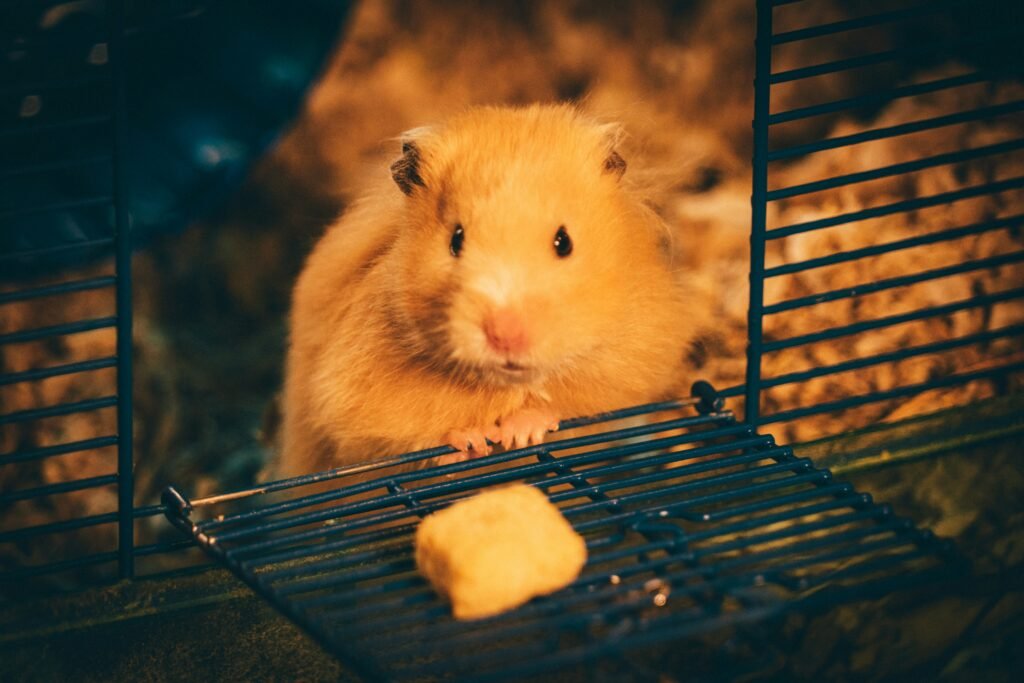
If your hamster empties the food bowl overnight, some of that food may be tucked away in a burrow. Hamsters naturally store food. To work out whether yours is eating well, look at what you offer, what gets stashed, and whether their weight and behavior stay consistent.
Build a feeding routine your hamster can use
When people look for safe foods for hamsters, they often start with a list of fruits and vegetables. The daily routine is just as important. Your hamster needs food formulated for hamsters, fresh water, and a way to eat at their own pace. A small piece of vegetable is an extra. It can add variety, but it can’t make up for a regular diet your hamster is refusing or picking through.
Start with a few evenings of observation. Offer the usual food in a dish so you can see what leaves it, and notice what your hamster actually chews. A hamster may carry several pieces away in their cheek pouches before sitting down to eat. If they consistently leave most of one component behind, take a photo of the food label and describe the pattern to your veterinarian. This is more useful than guessing how much the hamster ate based on the level in the bowl.
| What you are offering | How it fits into the routine | What to check |
|---|---|---|
| Complete pellets or blocks made for hamsters | The regular source of nutrition. | Check the label, freshness, and which pieces your hamster actually eats. |
| Plain fresh vegetables | Small extras for a hamster already eating its usual diet. | Introduce one food at a time, and look for leftovers. |
| A small piece of suitable fruit | An occasional extra for a healthy hamster. | Remove seeds or pits and keep portions small. |
| Plain drinking water | Keep it available at all times. | Check for leaks, blocked spouts, or bedding in the bowl. |
Start with a complete hamster food
Choose a complete pelleted or block diet formulated for hamsters. The Association of Exotic Mammal Veterinarians’ hamster guide explains how selective feeding from a loose mix can leave important nutrients behind. Check the label for feeding directions and use those as a starting point. Ask an exotic-pet veterinarian about the amount if your hamster is growing, underweight, overweight, or has a health condition.
If you are changing the base food for an otherwise healthy hamster, introduce it gradually alongside the food they already eat. Check what is being eaten during the change. Avoid using a homemade mix or an added protein supplement as a substitute for a complete diet unless your veterinarian has recommended a plan for your pet.
Read the package before changing food
Check that the label identifies the food as intended for hamsters and gives feeding directions. Look at the date and storage instructions, and note how long an opened bag usually lasts in your household. A smaller bag can be practical if you have one hamster and the food takes a long time to use up. Keep the food dry and sealed, away from excess heat or moisture. If it smells off, looks damp, or has visible mold, discard it.
When buying food, pay attention to what’s in the whole product rather than the most colorful picture on the bag. A package may show seeds or fruit even when those pieces are only part of the food. If you’re comparing options because your hamster selects only a few pieces, ask your veterinarian about a complete formula and how to transition. Keep the old package or a photo so you know what your hamster has already been eating.
Once you begin a change, observe appetite and droppings rather than assuming that a lower level in the bowl means the new diet is going well. Make one change at a time where possible. If your hamster is already eating less, losing weight, or having trouble chewing, get veterinary advice before treating it as a preference for the old food.
Offer fresh foods in small amounts
Washed, plain vegetables can give your hamster something different to explore. Try a small piece of cucumber, broccoli, or a leafy green. Introduce one new food at a time so you can see how your hamster tolerates it. An occasional small piece of apple without seeds is an option for a healthy hamster, but sweet foods are easy to overdo. Keep extras small enough that they do not displace the regular pellets.
Offer fresh food where you can find it again. Remove leftovers and check the immediate area for stashed pieces that could spoil, especially if the bedding around them gets damp. If you are looking for ways to encourage foraging, scatter a portion of the usual dry ration on clean bedding instead of adding more treats. See our hamster care guide for more ways to support normal behavior.
Introduce one fresh food at a time
Choose an evening when you can watch what happens to the fresh food. A piece left beside the bowl is easy to remove; a piece carried deep into a burrow is harder to retrieve before it spoils. Start near a familiar feeding spot and use a portion small enough to check afterward. Keep the regular dry food available throughout.
A simple record can help if you’re trying to figure out what changed:
- Write down the vegetable and roughly how much you offered.
- Note whether your hamster chewed it, left it, or carried it away.
- Remove uneaten pieces before they spoil and check nearby bedding if you saw your hamster stash the food.
- Keep an eye on the usual appetite and droppings as you introduce something new.
For example, if you offer cucumber on the same night you change pellet brands, it’s harder to tell what your hamster is responding to. You could keep the pellets familiar while trying the cucumber, or wait until the new pellets are established before introducing another food. If appetite or stools change noticeably, call your veterinarian for advice.
Keep water available at all times
Refresh the water daily. If you use a bottle, make sure the spout is at a comfortable height and that water actually comes out. Check that it has not leaked into the bedding. If you use a shallow, stable dish, clean it and replace the water when it collects bedding or food. A quick check during regular care can catch a blocked bottle or overturned dish before the next feeding.
Which foods should you leave out?
Keep chocolate, candy, salty snacks, and seasoned leftovers out of the enclosure. Skip any food that is moldy or has been stored in damp bedding. Fruit seeds and pits should be removed from foods you offer. If a hamster eats a potentially harmful food, contact a veterinarian promptly with the ingredient list, the approximate amount, and the time it was eaten. Keep the package if available. Avoid using treats made for other animals as a routine part of the diet.
Tell normal food storage from a change in appetite
A dry food stash is part of normal hamster behavior. If the dish is empty, your hamster is still active at its usual times, and you can see them eating some of the food they collect, the missing food may simply be stored. Look for changes from that individual hamster’s routine. An unusually full stash plus reduced activity or ongoing weight loss tells a different story from a single empty dish.
Check for perishable scraps when they are likely to spoil. A dedicated dish for vegetables makes it easier to see what was taken. Avoid taking the entire nest apart every time you check for one small piece of food. If a water bottle leaks into the bedding or a stash gets wet, remove the affected food and damp bedding and address the leak. Keep fresh dry food and water available while you do routine cleaning.
Adjust the setup if food or water is hard to reach
If your hamster spends much of its time near a particular hide, check that it can reach food and water from there without an awkward climb. A heavy, stable dish in an accessible spot can make it easier to see what is being eaten. If you use a water bottle, check the flow after refilling it; a full bottle tells you very little if the spout is blocked. If your hamster has started avoiding a ramp or platform, bring food and water down to an accessible level and report the change to your veterinarian. Our guide to hamster cage layout shows how to plan routes between a hide, food, and water.
You can still make feeding interesting once you know the hamster is eating normally. For instance, leave some regular food in the dish and scatter a portion on clean bedding where it can be found. That keeps the activity within the usual ration. If you need to monitor food intake closely, a dish makes that task easier than scattering everything out of sight.
Watch what changes over time
Check that your hamster is eating their regular food and moving around during their usual active hours. A small gram scale and a secure container can help you notice a weight change. Set the empty container on a stable scale, zero the display, and then let the hamster enter. Record the weight in grams and the date so the veterinarian can see the trend. Try to weigh them under similar conditions, and share a written record with your vet if you are concerned. A sudden change in weight, appetite, or stool deserves more attention than one untouched piece of vegetable.
Call a veterinarian who treats hamsters promptly if yours stops eating, loses weight, develops diarrhea or a wet rear, or has trouble chewing. If you suspect diarrhea, our guide to signs associated with wet tail explains what to look for while you contact the clinic.
Frequently asked questions
Can hamsters eat fresh vegetables every day?
Small portions of suitable vegetables can complement a complete hamster diet. Introduce one food at a time, remove uneaten fresh food promptly, and adjust portions to your hamster’s size and tolerance.
Are seed mixes nutritionally complete for hamsters?
Not necessarily. Some mixes allow selective feeding, so a hamster may eat favorite seeds and leave important components. Choose a diet labeled complete for hamsters and discuss persistent selective feeding with a veterinarian.
What should I do if my hamster eats a chocolate snack?
Call a veterinary clinic promptly. Tell them it was chocolate, the type if known, how much may be missing, and when it happened. Keep the wrapper handy. Follow the clinic’s instructions before offering any home treatment.
Why does my hamster hide food instead of eating it immediately?
Food caching is normal hamster behavior. Check hidden stores for spoiled fresh food, and track body weight and activity rather than judging intake only by an empty bowl.
When is a change in eating habits an emergency?
A hamster that stops eating, becomes lethargic, develops diarrhea, or has difficulty drinking needs prompt veterinary advice. Small mammals can deteriorate quickly, so do not wait several days to seek help.

References:
This article was created based on information from the following authoritative sources: American Society for the Prevention of Cruelty to Animals (ASPCA) and Royal Society for the Prevention of Cruelty to Animals (RSPCA).