Did you know thousands of pets in the U.S. get bitten by venomous snakes every year? These bites often happen during walks or playtime in the backyard. They can turn a calm afternoon into a serious medical issue. Proactive preparation is key to keeping your pet safe outdoors.
Snake avoidance training gives your pet the skills to spot and avoid danger. This training teaches dogs to recognize threats early. It helps them stay safe in areas where snakes are common.
If you live in a place where snakes are a risk, it’s crucial to take action. Preparing your dog now can save their life on future adventures. It’s a big step in keeping your furry friend safe and healthy.
Key Takeaways
- Venomous bites pose a significant risk to pets across the United States.
- Structured education helps dogs identify and retreat from dangerous reptiles.
- Proactive safety measures are essential for owners in snake-prone regions.
- Early preparation significantly reduces the likelihood of emergency veterinary visits.
- Prioritizing outdoor safety is a core responsibility for every dog owner.
Understanding Snake Avoidance Training
Learning about snake avoidance training is key for pet owners. This training teaches dogs to spot snakes by scent, sound, and sight. It’s part of a snake awareness program that lowers the chance of bites when outdoors.
Importance of Snake Avoidance
The main aim is to teach pets to be cautious. Dogs learn to recognize threats and stay away. Early snake safety tips can stop dangerous encounters in the wild.
“True safety in the outdoors comes from preparation and respect for the natural environment, rather than fear of the unknown.”
Regular training builds trust between you and your dog. It keeps them alert while hiking or walking in tall grass. Learning about snake behavior awareness helps both the dog and the owner stay safe.
Common Myths About Snake Behavior
Many think all snakes are aggressive and seek out humans or pets. But most snakes want to avoid trouble and only strike when cornered. It’s important to debunk these myths in any snake awareness program.
| Myth | Fact | Safety Impact |
|---|---|---|
| Snakes hunt dogs | Snakes avoid large animals | Reduces panic |
| All snakes are venomous | Many species are harmless | Encourages caution |
| Snakes chase people | Snakes flee from vibrations | Promotes calm |
Knowing the truth about snakes helps you stay calm during an encounter. This rational mindset leads to better decisions for your pet’s safety. Learning about snake behavior awareness lets you enjoy the outdoors with confidence.
Why Training is Essential for Pets
It’s crucial for dog owners to prepare their pets for snake encounters. Starting early with snake safety tips can greatly lower the risk of a dangerous meeting. Training helps your dog learn to avoid threats, even if they’re curious.
Protecting Your Dog from Snakes
The main goal of training is to keep your dog safe from venomous snakes. Teaching your dog to fear snake scents or sounds helps them stay away. This is key to preventing snake bites.
Dogs without training might chase after snakes because of their natural instincts. By teaching them to stay back, you help them make safer choices outdoors. Regular training keeps these important habits strong.
Awareness of Wildlife in Your Area
Knowing the wildlife risks in your area is vital for pet owners. The US has different snake species, like rattlesnakes in the West and copperheads in the East. Knowing which snakes are common in your area helps you focus your snake safety tips on the right threats.
| Snake Group | Primary Region | Risk Level |
|---|---|---|
| Rattlesnakes | Nationwide | High |
| Copperheads | Eastern/Central US | Moderate |
| Cottonmouths | Southeastern US | High |
| Coral Snakes | Southern US | Moderate |
Being aware of your environment is your first defense. Always watch out for snakes in tall grass, rocky areas, or near water. With knowledge and training, you can make your dog’s world safer.
The Basics of Snake Avoidance Training
Learning about snake avoidance training is key to keeping your pet safe outside. This training teaches dogs to spot the signs of venomous snakes. It helps them learn to stay away from snakes by associating their presence with something bad.
What is Snake Avoidance Training?
This training is a way to keep dogs safe from snake bites. It uses controlled settings to introduce dogs to snakes, but not the dangerous kind. The goal is for the dog to know snakes are a threat and to stay away.
Looking for the best ways to avoid snakes? Many say getting professional help is best. This training doesn’t make dogs scared of the outdoors. It teaches them to respect certain wildlife, keeping them calm and alert during walks or play.
Techniques Used in Training
Training methods include visual, sound, and smell cues. Dogs learn to recognize a snake’s rattle or smell as something bad. This helps them remember to stay far away from snakes in the wild.
The table below shows the main ways to teach dogs to avoid snakes:
| Training Method | Primary Focus | Expected Outcome |
|---|---|---|
| Visual Conditioning | Sight recognition | Immediate retreat upon seeing a snake |
| Auditory Cues | Sound recognition | Alertness to rattling or hissing noises |
| Scent Association | Olfactory detection | Avoiding areas where snakes are present |
Using these methods takes time and effort. By teaching your dog to avoid snakes, you ensure their safety outdoors. Proper snake avoidance training brings peace of mind on every outdoor trip.
Choosing the Right Time for Training
When it comes to training your pet, timing is everything. You need to think about the calendar and your dog’s age. This ensures the training is effective and safe for your pet. Learning at the right time helps your dog learn better and for longer.
Seasonal Considerations
Reptiles are more active when it’s warmer. In spring and summer, snake behavior awareness is key for outdoor safety. Training during these times helps your dog learn from real-life situations under your watch.
“The most effective time to reinforce avoidance behaviors is when the environment naturally presents the risks you are training against.”
It’s best to start training just before the busy season. This way, your dog is ready when they face real dangers. Here’s a guide on when to train based on the season:
| Season | Reptile Activity | Training Focus |
|---|---|---|
| Spring | Emerging/High | Initial Exposure |
| Summer | Peak/Active | Reinforcement |
| Autumn | Decreasing | Maintenance |
| Winter | Dormant | Rest/Review |
Age Appropriateness for Dogs
It’s not just about the time of year. Your dog must be mentally ready for snake identification training. Puppies might not have the focus needed for these lessons. Experts say wait until your dog is at least a year old and has basic obedience skills.
A young dog might get too stressed by the training. Consistency and focus are key for your dog to learn well. Always talk to a pro to see if your dog is ready for this special training.
Effective Techniques for Snake Avoidance
Learning to avoid snakes safely is key for your pet’s safety. Training should never scare or intimidate your dog. Instead, it should help them feel safe and confident.
Using Controlled Exposure
Controlled exposure is the best way to teach your dog to avoid snakes. It lets them get used to the sight, sound, and smell of snakes in a safe way. This is done with non-venomous or muzzled snakes to keep your dog safe.
The goal is to teach your dog to stay away from snakes. This is done by associating snakes with a negative outcome, like a gentle correction. It’s important to do this slowly and consistently to help your dog remember.
Positive Reinforcement Strategies
While teaching your dog to avoid snakes, it’s also important to use positive reinforcement. When your dog shows the right reaction, like moving away, they should be rewarded. This shows them that avoiding snakes is a good thing.
Effective snake handling techniques follow these main points:
- Consistency: Always use the same cues and signals.
- Distance: Give your dog enough space to move away safely.
- Reward Timing: Reward your dog right after they choose to walk away.
- Patience: Don’t rush the training, as dogs learn at different rates.
By using these methods, you can teach your dog to be cautious around snakes. These snake handling techniques help keep your pet safe on outdoor adventures. Always remember, the best ways to avoid snakes focus on your dog’s mental health.
Professional Training Options
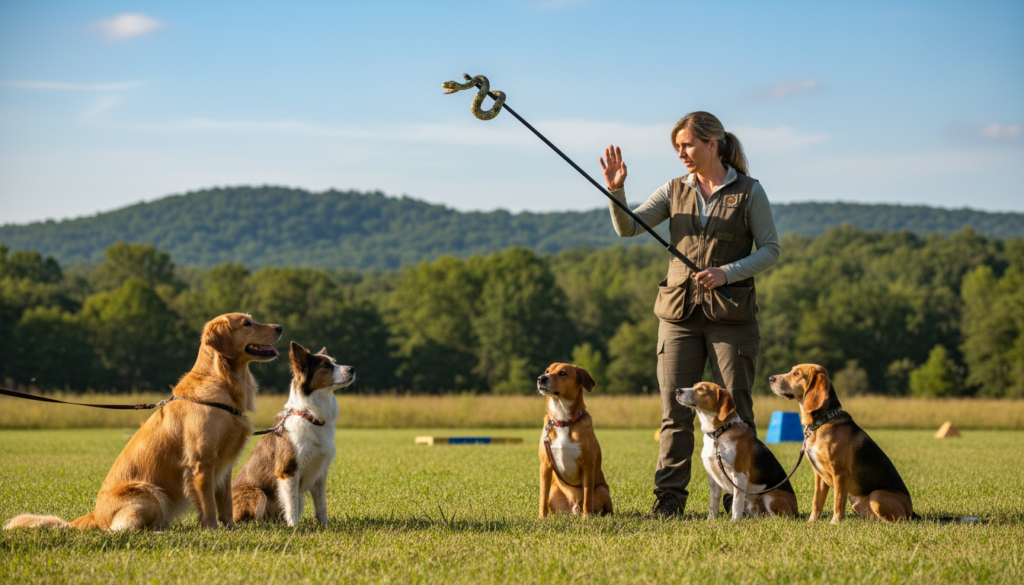
Choosing a snake awareness program for your pet is crucial. The quality of the instructor greatly affects the training. Professional trainers offer a structured approach to teach your dog to avoid snakes.
They ensure the training is safe and effective for your dog. This is important for their well-being.
Finding a Certified Trainer
Look for trainers who focus on avoidance behaviors, not just obedience. They should have experience with different dog breeds and temperaments. It’s best to choose trainers with certifications from well-known animal behavior organizations.
Ask about their experience with snake awareness programs. Request references to see how satisfied previous clients were. A good trainer will share their methods and safety plans with you.
Evaluating Training Programs
When comparing programs, check their safety and humane methods. Stay away from those that use too much force or fear. Instead, look for positive reinforcement and clear communication.
Success rates are also key. A good program will show you how well their methods work. Use the table below to compare features when choosing a program for your pet.
| Feature | Standard Program | Premium Program |
|---|---|---|
| Trainer Certification | Basic | Advanced/Specialized |
| Safety Protocols | Minimal | Comprehensive |
| Follow-up Support | None | Included |
| Methodology | Mixed | Positive Reinforcement |
Do-It-Yourself Training Tips
You can teach your dog to avoid snakes at home. Start with simple steps and patience. The goal is to teach your dog to stay away from snakes.
Creating a Safe Training Environment
First, make sure there are no real snakes around. A safe area helps your dog learn without fear. Pick a quiet, fenced spot where your dog feels safe.
- Clear the area of tall grass, debris, or hiding spots that could harbor real snakes.
- Use a long lead to maintain control while allowing your dog enough freedom to explore safely.
- Minimize distractions like other pets or loud noises to keep your dog’s attention on the task.
“The foundation of any successful training program is a calm environment where the animal feels safe enough to learn new behaviors without fear.”
Step-by-Step Training Methods
Good snake avoidance training needs repetition and clear signals. Start with a snake-like object that’s not scary. When your dog sees it, tell them to move away.
Consistency is key in teaching your dog to be safe. Give treats when they move away. This helps them learn to avoid snakes.
Keep training sessions short and fun. If your dog gets confused, go back to the basics. With regular practice, your dog will learn to stay safe from snakes.
Equipment and Tools for Training
Choosing the right equipment is key to mastering snake handling techniques. Your goal is to control your pet while keeping them comfortable. The right tools help you guide your dog away from dangers without stress.
Recommended Leashes and Collars
A standard six-foot leather or nylon leash is best for most training. It lets your dog move freely while you react quickly to threats. Stay away from retractable leashes, as they can’t lock fast enough for serious training.
For collars, a flat buckle or martingale collar is safest. They prevent your dog from slipping out during sudden moves. Always check your gear for rust and wear before training.
Training Aids to Consider
Some tools can improve your snake handling techniques during practice. A high-quality clicker is very helpful for marking good behaviors. It teaches your dog that moving away from snakes is good.
Think about adding these to your training kit:
- Treat pouches: Keep treats ready for quick rewards.
- Target sticks: Help guide your dog’s focus.
- Long lines: Great for practicing in big spaces.
- Whistles: Use a consistent sound to get your dog’s attention.
The best tools help you stay calm and focused. With the right gear, you create a safe space for your dog to learn and stay safe in the wild.
Safety Precautions During Training
Keeping your dog safe is the top priority when teaching them to avoid snakes. Make sure the area is safe before starting any training. This way, the learning process is positive and controlled for both you and your dog.
Recognizing Signs of Distress in Dogs
Dogs show their comfort levels through body language. It’s important to watch for signs of over-arousal or fear during training. If your dog pants a lot, tucks its tail, or won’t take treats, it might be too stressed.
Look for signs like lip licking, yawning, or avoiding the training area. These mean your dog needs a break. Knowing when to stop is key to avoiding panic.
Emergency Measures
Accidents can still happen during outdoor training. Always have a plan for emergencies. Save emergency vet clinics in your phone and keep a first aid kit handy.
If a bad interaction happens, stay calm. This helps prevent your dog from getting anxious. Move your pet to safety and check for injuries. Quick action is crucial for your dog’s well-being.
| Safety Category | Action Required | Priority Level |
|---|---|---|
| Environment | Clear brush and debris | High |
| Monitoring | Watch for stress signals | High |
| Emergency | Keep vet contact handy | Critical |
| Equipment | Use secure, sturdy leashes | Medium |
Following these snake safety tips builds trust and safety. Always be ready and watchful. This way, you can focus on training while keeping your dog safe.
Reinforcing Training Over Time
Keeping your dog safe means you must keep practicing and refreshing their skills. The first training is crucial, but it’s not enough for long-term safety. If your dog doesn’t use these skills often, they can forget them when they need them most.
Importance of Consistent Practice
Think of snake avoidance as a skill that needs regular practice to stay sharp. Dogs do well with routine. Short, controlled practice sessions during outdoor activities help keep their avoidance skills sharp. This keeps them alert and ready to respond to snakes, even after a long time.
Training in different places helps your dog understand the danger is everywhere. If you only train in one spot, your dog might think snakes are only a threat there. Regular exposure in various settings teaches them to avoid snakes no matter where they are.
When to Refresh Your Dog’s Training
Deciding when to refresh your dog’s training depends on several things. This includes your local weather and your dog’s personality. In many places, snakes are more active during warmer months. Spring is the ideal time to review safety skills before the peak season.
Also, consider a refresher if your dog starts to show more interest in wildlife. Or if you’ve moved to a new area with different snakes. If it’s been over a year since your dog last saw a snake, a professional check is a good idea. Staying proactive is key to keeping your dog safe all year.
Assessing Your Dog’s Progress
Watching how your dog reacts in different places is key. This helps you see if they’ve learned about snake identification training. By keeping an eye on their actions, you make sure they stay safe outside.
Signs of Successful Training
A trained dog will show clear signs when they see a snake. Look for specific behaviors that show they’ve learned from snake identification training.
- Immediate Alertness: The dog stops moving or changes direction upon spotting the snake.
- Maintained Distance: Your pet chooses to keep a safe buffer zone between themselves and the reptile.
- Avoidance Behavior: The dog actively moves away from the area rather than investigating or barking.
- Focus on Owner: The dog looks to you for guidance after identifying the hazard.
Adjusting Techniques as Needed
Every dog learns at their own pace. Some might need more time to learn these important skills. If your dog isn’t learning as you hoped, be patient and think about changing your approach.
Here are some steps to take if progress is slow:
- Simplify the Environment: Reduce distractions during practice sessions to help your dog focus on the target.
- Vary the Stimuli: Use different types of visual or scent-based aids to reinforce the lessons.
- Consult a Professional: If your dog continues to struggle, a certified trainer can provide personalized feedback.
Remember, consistent practice is key. By adjusting your training to fit your dog’s learning style, you can make sure they’re ready for real-life situations.
What to Do If Your Dog Encounters a Snake
Knowing how to handle a snake encounter can save your pet from serious harm. When you’re out with your dog, staying calm is key. It helps protect your pet from danger.
Immediate Actions to Take
If you see a snake, act fast. Move your dog away from it. Keep them on a short leash and back up slowly without turning your back.
If your dog gets bitten, don’t try to find out what kind of snake it is. Snake bite prevention is best, but if bitten, get your dog to a vet fast.
Keep your dog calm and still on the way to the vet. Avoid letting them move too much. This can help slow down the venom.
Long-Term Strategies for Prevention
Preventing snake bites is important. Keep your yard clean by removing brush and woodpiles. This makes it less likely for snakes to be near your home.
Also, keep your yard tidy and free of debris. Think about putting up snake-proof fencing if you live where venomous snakes are common.
Always be careful when walking your dog, more so in warmer months. Being alert can help keep your dog safe from snakes.
Resources for Snake Avoidance Training
Keeping your dog safe is a big job that needs your constant effort. You can get better at it by using top-notch resources. These can help you improve your snake avoidance training skills.
Recommended Reading and Manuals
There are many books written by experts on dog behavior and how to stay safe from predators. “The Dog Trainer’s Resource Guide” is a great example. It gives you practical tips for keeping your dog safe in areas where snakes are common.
These books help you understand animal behavior better. They also make sure you remember what you learned in training sessions.
Digital Learning Platforms
Online courses from places like the American Kennel Club are great for busy people. They offer lessons you can do at your own pace. You can watch videos on YouTube from trainers like High Desert Snake Avoidance.
These videos show you how to train your dog to avoid snakes. They help you keep your training up to date all year round. Using these resources keeps you and your pet ready for any outdoor adventure.
FAQ
Why is snake avoidance training important for dog owners in the United States?
What are the most common myths regarding snake behavior that owners should know?
How does local wildlife knowledge contribute to a dog’s safety?
What exactly does professional snake avoidance training entail for a dog?
When is the optimal time to schedule a training session for my dog?
What techniques are most effective for teaching a dog to avoid dangerous reptiles?
How can I find a qualified professional to conduct this training?
Are there DIY methods for reinforcing snake safety at home?
What equipment is necessary for a successful avoidance training session?
What safety precautions should be taken during the learning process?
How often should snake avoidance skills be practiced or refreshed?
How can I tell if my dog has successfully internalized the training?
What is the immediate action plan if my dog encounters a snake in the wild?
Where can I find additional resources for ongoing snake safety education?

References:
This article was created based on information from the following authoritative sources: American Society for the Prevention of Cruelty to Animals (ASPCA), ASPCA Animal Poison Control Center, and Merck Veterinary Manual.