Guinea pigs should generally live with at least one compatible guinea pig. A companion can answer a quiet call from inside a hide, graze nearby while the house is asleep, or follow the other pig out to investigate fresh hay. Even a person who spends hours beside the pen cannot take part in those exchanges in quite the same way. If you are adopting for the first time, a bonded pair lets you bring home two animals who have already chosen to live together.
If you already have one guinea pig, start by finding out why they are alone. A recent loss, a fight with a former cage mate, and an illness that requires isolation call for different next steps. A guinea pig who stops eating or passing droppings needs urgent veterinary attention. A noticeable drop in appetite, weight loss, or a sudden change in behavior also warrants prompt advice from a veterinarian who treats guinea pigs. Introducing another animal can wait while you address a health concern.
What a companion adds to an ordinary day
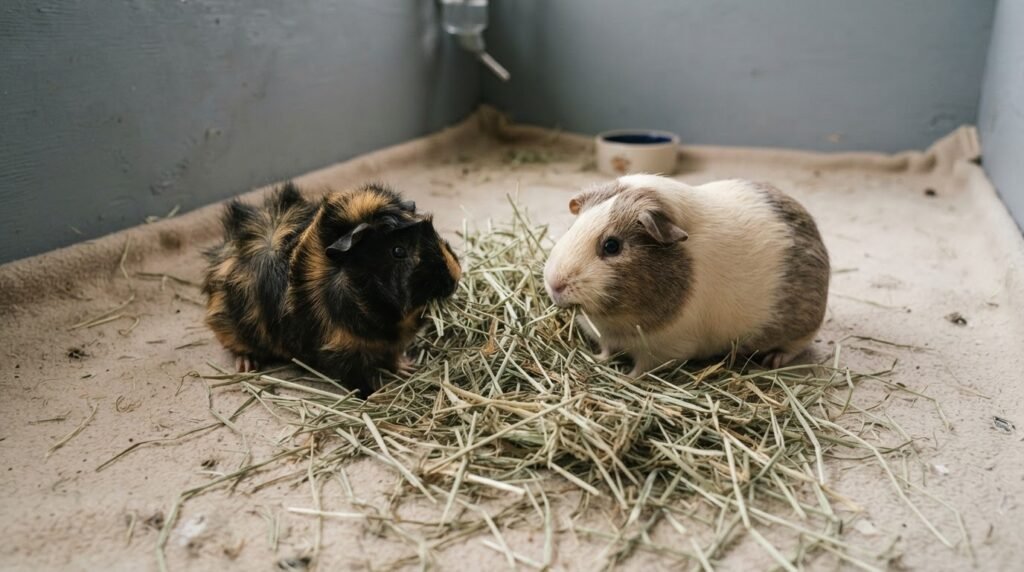
Watch two settled guinea pigs when nobody is handing out treats. One might nose through a hay pile as the other rests under cover. When the first moves across the pen, the second may follow at a distance, making soft sounds along the way. This is companionship even if the animals rarely touch. Being able to approach a familiar neighbor, share an activity, and then move away gives each animal choices throughout the day.
Owners sometimes expect friends to sleep in the same house. Some do, but separate naps tell you very little on their own. Look at what happens when the quieter pig gets up. Can they reach hay and water, investigate the room, and settle again without being driven away? A pair can be perfectly comfortable at opposite ends of the enclosure. Our guide to guinea pig sounds can help you put a call in context alongside posture and the other pig’s response.
Find a match for the guinea pig you have
Ask a guinea pig rescue whether it offers introductions or can help evaluate a potential match. Describe your resident pig’s age, sex, health, and history with other guinea pigs. Specific examples are helpful. An animal who was repeatedly chased away from the only food dish had a different experience from one who fought and sustained bites, even if both were described as difficult to pair. Ask what the rescue observed when its own guinea pigs shared space and what support it offers if the match is unsuccessful.
Two females or two compatible males can live together. A neutered male can also live with a female once a veterinarian confirms the post-surgery fertility interval has passed. Have an experienced professional confirm each animal’s sex before housing them together if there is any uncertainty. Family ties, matching coat colors, and a similar age tell you less about compatibility than the way two individuals respond to one another. Avoid splitting an established pair to provide your single pig with a new friend.
If you are still deciding whether to adopt, ask to see the pair at mealtime and find out which pig tends to hang back. Plan for food, bedding, veterinary care for two individuals, and help during vacations. Humane World for Animals’ adoption guide outlines the daily commitment. Keeping a short list of local clinics that see guinea pigs can make the practical side of bringing a pair home much easier.
Arrange the enclosure so both pigs have choices
Start with usable floor area on one level. Two hides wedged side by side in a narrow cage can leave just one path to the food, even when the enclosure looks well equipped from above. Measure the interior after placing furnishings and trace a route from each resting spot to hay and water. For a pair, Humane World for Animals lists 7.5 square feet as a minimum and prefers at least 10.5 square feet in its housing guidance. Give the pair more room when possible, especially if one regularly blocks a passage.
| What to check | What it looks like when both pigs have access |
|---|---|
| Resting spots | Each pig can settle under cover and walk out even when the other is nearby. |
| Hay | Both can graze at once from piles set far enough apart. |
| Water | Each can approach a working water source without passing through a guarded corner. |
| Open floor | Both can walk past a resting pig without squeezing against it. |
| At feeding time | You can see each pig take food, chew, and stay long enough to eat. |
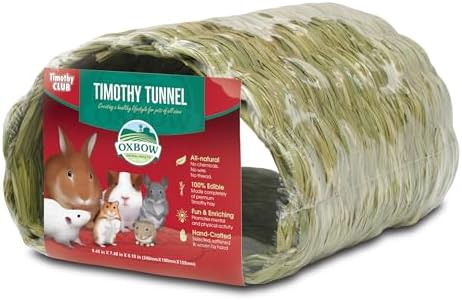
Open-ended shelters give a pig another way out if its companion arrives at the entrance. A plain cardboard box with two generously sized openings can serve the same purpose as a tunnel. Remove staples, tape, and sharp edges, and replace it when it gets wet. Leave clearance beyond both doors. Two openings provide little benefit if one faces a wall or a heavy bowl that the pig cannot move past.
As an Amazon Associate, Paws & Spells earns from qualifying purchases.
Oxbow’s woven Timothy Tunnel is open at both ends. Check the actual openings against your larger pig’s width and leave a clear route at either end so one animal can walk away from the other.
Put hay and water in separate parts of the enclosure so one guinea pig cannot stand guard over both supplies at once. Position drinking points at a comfortable height and check each one daily. Watch each pig use the arrangement, especially after moving furniture or adding a new type of bottle. Keep their familiar water source available while they learn where the second one is.
For pigs accustomed to bottles, the blue Choco Nose C128 has a 10 mm nozzle and a cage mount that can provide a second drinking spot. Position it within easy reach and check that water flows after every refill.

Give unfamiliar guinea pigs a safe start
Before the animals meet, ask your rescue or veterinarian how to manage a newcomer’s health check and any quarantine. Bringing cages close together can expose the resident pig to illness before you have clearance for contact. Arrange separate accommodation in advance so that you can follow the advice you receive. Once cleared, use a roomy, supervised, neutral area for introductions. Provide plenty of hay in more than one place, good footing, and shelters with escape routes.
Allow time to stay and watch. Sniffing, rumbling, brief mounting, or a short chase may be part of working out a relationship. Pay attention to how an encounter ends. Does the pig being followed move away and resume eating, or is the other animal repeatedly preventing it from resting or reaching food? If there is biting, a locked fight, or sustained aggression that puts either animal at risk, use a rigid divider to separate them safely. Keep bare hands out of the fight. Check for injuries and contact your veterinarian about any bite or wound.
An unsuccessful introduction tells you about that particular match and setting. Putting the same animals back together right after a fight can lead to another injury. Give each safe accommodation and talk through the sequence with a rescue experienced in guinea pig bonding. If introductions go well, prepare a spacious, clean shared home with the same separate resources and continue observing both pigs once they settle in.
When a guinea pig loses a partner
Keep familiar food, hiding places, and daily routines available. Notice when the surviving pig last ate hay, whether droppings look usual, and whether the animal is moving around comfortably. If you weigh your guinea pigs routinely, record each animal’s weight separately so you can compare the survivor with their own usual range. A change in eating after a companion dies can reflect illness as well as disruption. Our guide to signs a guinea pig needs a veterinarian explains changes worth reporting.
If the cause of death is unknown or might be infectious, ask your veterinarian about the survivor and the timing of a new introduction. Once it is appropriate, a rescue may be able to match an older guinea pig with a compatible adult. If you are unable to take on another pet permanently, explain that at the outset. Some rescues can discuss fostering arrangements or help find a home with suitable company. In the meantime, quiet daily attention and familiar opportunities to forage give the remaining pig a predictable routine.
Frequently asked questions
Can my rabbit be my guinea pig’s companion?
House them separately and look for a compatible guinea pig. Rabbits communicate differently, have different dietary needs, and can injure a guinea pig with a kick. Even a gentle rabbit cannot provide the same social exchanges as another guinea pig.
Should I get a third guinea pig if my pair is doing well?
A settled pair already has companionship. A third animal changes the group and may disrupt an existing bond. Before considering it, talk to a rescue about the particular animals, available floor space, and how you would house them if the new arrangement failed.
Can an older guinea pig still make a friend?
Yes. Age alone does not rule out a good match. Tell the rescue about the older pig’s mobility, resting habits, and energy level. Ask your veterinarian about health concerns first and make sure food, water, and shelter remain within easy reach after the introduction.
Is a mirror useful company while I look for a match?
A reflection cannot respond like another guinea pig or move away independently. Keep up familiar household sounds, gentle interaction, and foraging opportunities as you arrange a suitable match. If an object seems to provoke repeated alarm or agitation, remove it and give your guinea pig space.
What should I ask a sitter to check in a pair?
Show the sitter how to recognize each pig, where each usually rests, and how to see both eating. Ask for a brief update on both animals at each visit. A shared hay pile getting smaller confirms that someone ate, but it can hide a change in the quieter pig.