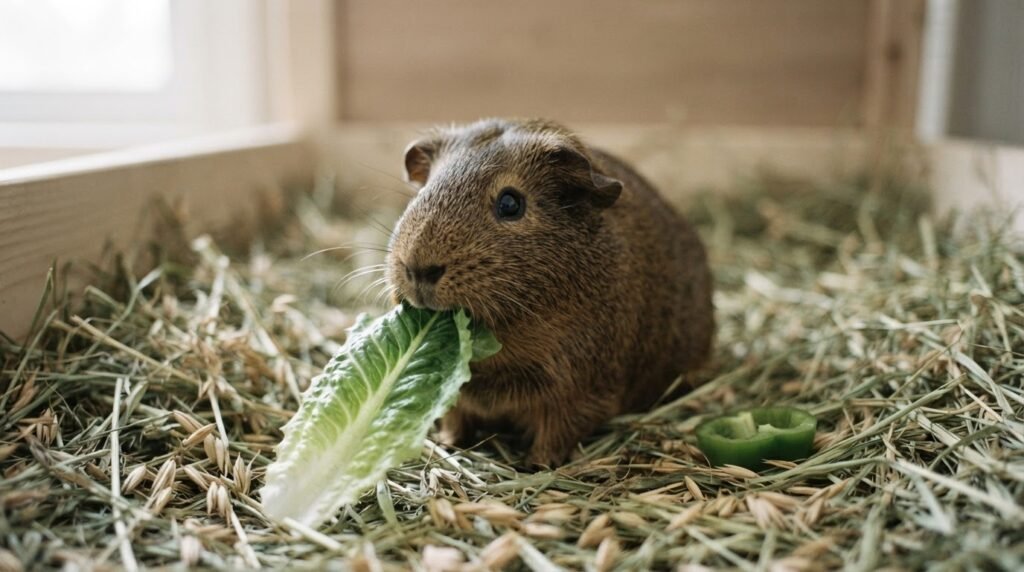
For a healthy adult guinea pig, build the fresh portion of the day’s food around leafy vegetables such as green leaf lettuce, with a little bell pepper for vitamin C. Cilantro, endive, cucumber, and zucchini can add variety. A blueberry or a thin slice of seedless apple belongs in the occasional treat category. A colorful plate can look like a full meal even when it supplies very little of the long fiber a guinea pig needs.
What belongs on the daily menu?
Think of fresh vegetables as one part of a larger feeding routine. Unlimited grass hay supplies fiber and opportunities for sustained chewing. A measured amount of guinea pig pellets provides additional nutrients. Fresh drinking water should always be accessible. Produce adds variety and vitamin C, which guinea pigs must obtain from food. A bowl of cucumber and lettuce delivers plenty of water but leaves an opportunity to include something richer in vitamin C, such as bell pepper.
For a healthy adult already accustomed to vegetables, Humane World for Animals gives a general range of half a cup to one cup of vegetables per pig per day. That is the combined amount of all the vegetables. If you divide it between breakfast and supper, set aside the day’s portion first so two caregivers can see what is left. A veterinarian familiar with your guinea pig can tailor that amount for growth, pregnancy, weight concerns, or a medical condition.
A fresh food list you can use at the counter
| Food | How to offer it | Place in the routine |
|---|---|---|
| Green or red leaf lettuce, endive | Rinsed leaves | Base for the vegetable portion |
| Sweet bell pepper | Small strips of flesh | Regular source of vitamin C |
| Cilantro, cucumber, zucchini | A sprig or small slice | Rotate with familiar vegetables |
| Carrot | Thin slice | Occasional vegetable |
| Apple, strawberry, blueberry | Seedless apple sliver or small berry portion | Occasional treat |
The easiest shopping list has a dependable leafy green, a vitamin C source, and one other vegetable your guinea pig already knows. Green leaf lettuce, green bell pepper, and zucchini make one combination. Another is red leaf lettuce, a little cilantro, and bell pepper. There is no need for a different bowl every day or a refrigerator full of produce that spoils before you use it.
Choosing greens and vegetables
Pick clean, fresh-looking leaves and wash them under running water. Green and red leaf lettuces make convenient bases because you can separate a few leaves at a time. Endive offers a different texture. Mix a small sprig of cilantro through familiar greens if your guinea pig already tolerates it. Strong-smelling herbs can take a little getting used to. Offer them alongside food the guinea pig reliably eats so the whole portion is still appealing.
Sweet bell peppers are different from hot peppers. Use the fleshy part of a plain sweet pepper, cut away the stalk and core, and offer a small strip. If the pepper becomes slimy inside or moldy near the stem, discard it. Our guinea pig vitamin C guide explains why a dependable dietary source matters even when the pellet bag lists the vitamin on its label.
Cucumber and zucchini are useful when you want to vary the texture of the bowl. Rinse the skin and offer a small slice alongside leafy food. Carrot can be served in a thin piece occasionally. A whole baby carrot is a substantial treat for a small animal when added to an already full portion. Think about the quantity the guinea pig actually eats, especially if different family members enjoy handing out snacks.
How much fruit is a treat?
Start with the idea of a taste. One small blueberry or a thin sliver of strawberry gives a guinea pig a chance to try the flavor. Remove the core and seeds from apple or pear before cutting off a small piece of flesh. Avoid fruit in syrup, juice, sweetened fruit snacks, or dried fruit pieces from trail mix. Drying concentrates the sugar in a much smaller bite.
An occasional piece of fruit can be offered by hand when your guinea pig is already comfortable approaching. If a visitor wants to offer food later that day, set aside part of the regular vegetables for them. That way a treat remains a small event even in a household with several enthusiastic helpers. A guinea pig that dislikes fruit can still get vitamin C from suitable vegetables. There is no nutritional reason to coax it into eating something sweet.
Preparing and storing a portion
Use a clean knife and cutting surface. Rinse away grit from leaf folds, trim damaged areas, and separate vegetables from any dressing or seasoning. Food left from your own salad works only if it is still plain and you can identify everything in it. Plain lettuce touched by a fork covered in onion dressing is a poor choice. Keep a few unseasoned leaves aside before preparing the human meal.
Cut food into manageable pieces that you can recognize in the enclosure later. This makes it easier to tell whether a pig ate its pepper or dragged the strip behind a hide. A few pieces spread over clean feeding spots also give companions more room to eat. Avoid hiding moist produce deep in hay or bedding, where it can be overlooked. Remove wilted or soiled leftovers promptly, especially in a warm room.
Refrigerate the unused produce and keep it separate from raw meat and prepared sauces. Check the underside of leaves and the inside of a cut pepper before the next serving. If you portion ahead for a sitter, label containers by day and by animal when diets differ. A note saying “split between breakfast and supper” is clearer than several containers of identical greens with no quantities marked.
Introducing something new
Choose a day when your guinea pig is eating and behaving normally. Add a small piece of one new vegetable to the familiar portion. Watch whether it eats the food and continues to eat hay and produce its usual droppings. Try another new food only after you have seen how the first one goes. If you serve four unfamiliar ingredients together, it is difficult to tell which one was refused or which change coincided with soft stools.
If your guinea pig refuses a new leaf but goes straight back to eating hay, remove the leftover and try another day. Loss of interest in familiar food is different. Reduced eating, fewer droppings, apparent pain, or watery diarrhea warrants prompt veterinary advice. A guinea pig that stops eating needs urgent attention. Tell the clinic when you last saw normal eating and droppings. Our guide to signs of illness in guinea pigs describes other changes worth reporting.
Foods to leave off the list
Keep onion, garlic, chives, raw potato and its sprouts, rhubarb, and avocado out of the enclosure. Skip unfamiliar garden clippings and mixed leaves you cannot identify. A kitchen scrap bowl might contain several different plants, pits, or seasonings. Choose the safe portion of a known vegetable yourself, and discard moldy food. Washing cannot make an unidentified plant safe.
If you think your guinea pig has eaten an unsafe food, remove access and contact a veterinarian promptly for advice. Keep the packaging or take a photo of the plant and estimate how much might be missing. Mention whether another animal shared the food. Do not wait for signs of illness before calling about a suspected poisoning or try to treat it by offering extra produce.
Frequently asked questions
Can two guinea pigs share one vegetable plate?
They can share food, but offer separate feeding spots and observe both pigs. A confident pig may carry away the pepper while the other eats only lettuce. Set aside part of each animal’s portion before serving so both get access to the full mix.
Can I swap an entire serving of vegetables for apple?
Keep fruit to a small occasional taste. If your usual lettuce is unavailable, choose another familiar leafy green or offer a familiar vegetable in its place for that meal. Keep hay, water, and the guinea pig’s usual pellets available.
Are the vegetables in a packaged salad mix suitable?
Read the ingredient list and pick out only familiar, suitable leaves. Leave out the dressing, croutons, cheese, seasoned toppings, and any pieces you cannot identify. Check the bottom of the bag for damp, slimy leaves before serving.
What if my guinea pig has had bladder stones?
Ask the treating veterinarian for a plan based on your guinea pig’s history and the rest of its diet. Bring a short list of its usual hay, pellets, vegetables, and serving sizes. An isolated list of high or low calcium foods gives an incomplete picture.
How should I plan a weekend away?
Leave the usual vegetables in measured portions with written feeding times. Show the sitter what normal hay consumption and droppings look like, where to remove leftover produce, and how to tell the pigs apart. Leave the number of a clinic that treats guinea pigs.