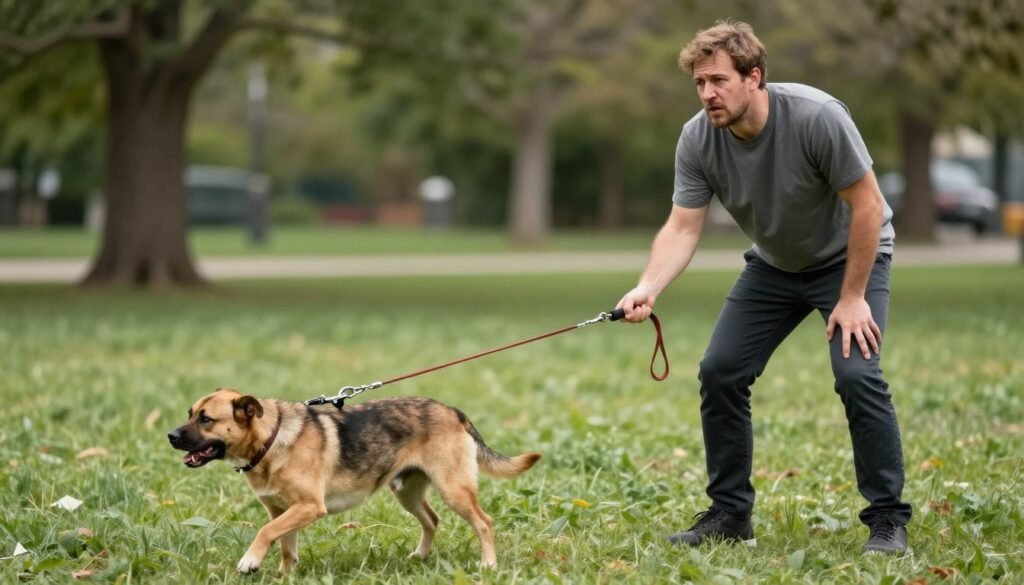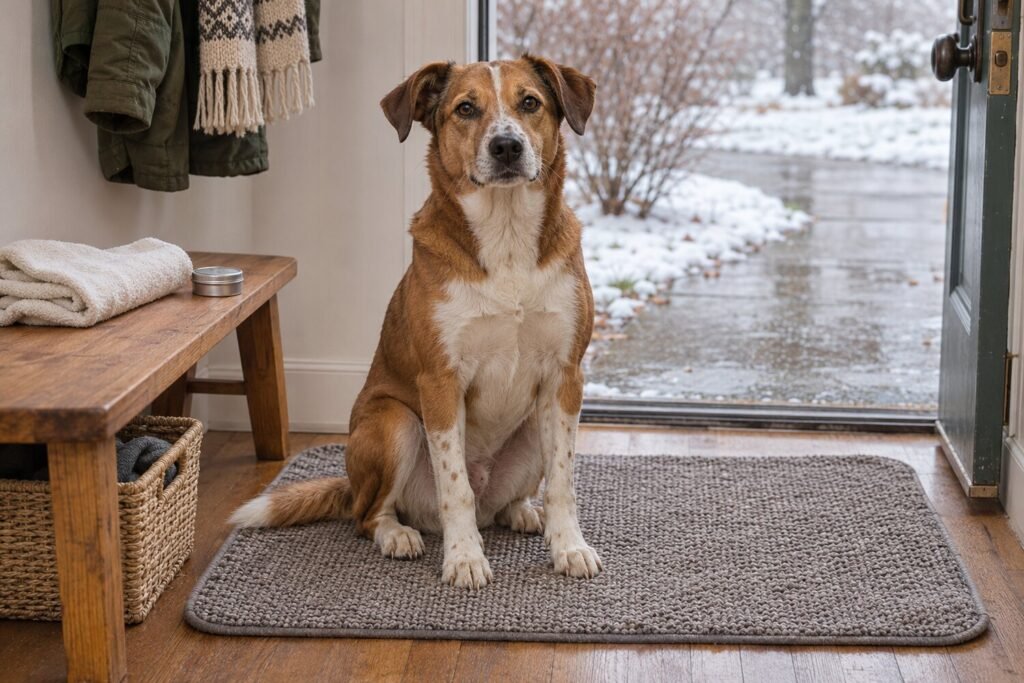
The sidewalk outside your front door is clear, but the ramp at the end of the block is white with road salt. If your route is mostly clear, dog paw balm for winter walks can add a thin layer of protection to healthy pads as you cross the occasional treated patch. If your usual route runs through salty slush or across long stretches of treated pavement, boots offer more coverage. Either way, wash and dry your dog’s feet when you get back. Pick a route that avoids the worst patches and keep a towel by the door so cleanup is easy.
Start with the stretch of sidewalk you can’t avoid
Think about the few yards your dog has to cross, even when you’re just going out for a bathroom break. A cleared walk and a heavily salted apartment entrance can be part of the same trip. So can a dry side street and a crosswalk where slush gets pushed up against the curb. Those are the spots that tell you what kind of protection would be useful.
| What your usual walk looks like | What helps most |
|---|---|
| Mostly clear pavement with a few treated patches | Go around the patches, wash and dry paws afterward, and consider a thin layer of paw protectant on healthy pads before you leave. |
| A long stretch of deicer or salty slush you can’t avoid | Look for full paw coverage and check how your dog walks in it before committing to the whole route. |
| Paw lifting or limping that continues once you’re indoors | Check the feet and contact your veterinarian if discomfort continues or you see an injury. |
Let’s say your building’s front steps and the sidewalk beyond them are clean, but the garage ramp is salted every morning. Crossing at a cleared driveway may take care of most of the exposure. If the only way out is through a parking lot covered in wet deicer, that same detour may be impossible. For that second route, our guide to choosing dog boots for snow and salted sidewalks explains when a covered paw and a grippier sole make a difference.
Check the route again after a thaw or a fresh salting. A curb cut that was dry at lunchtime can be wet with meltwater by the evening walk. The useful question is whether your dog can get there and back without crossing much of it. You can usually answer that on your next outing without buying anything.
When to use dog paw balm for winter walks
Think of a paw wax as a coating you rub onto the surface of the pad. The ASPCA’s cold-weather safety guidance suggests applying a vet-approved paw protectant before going out to help guard against salt and chemical agents. The coating follows the shape of the foot. A boot covers the whole paw, and a boot with a tread gives your dog a different surface to walk on. Look at what your route calls for.
Paw balm is easiest to fit into a routine when your dog already lets you handle their feet and has healthy pads. Picture a dog who crosses a lightly treated corner on two short trips a day and happily offers a paw when you pick up the towel. There, the balm has a clear job and a realistic chance of being used. If your dog pulls away the instant you reach for a foot, getting them comfortable with a quick paw check may be the more useful first step. Try a brief touch while they’re relaxed indoors, then let go and reward them. Save the longer handling session for a time when you aren’t both waiting to get outside.
If you’re shopping, distinguish a product sold as a pre-walk protectant from a balm sold primarily to moisturize dry pads. Check the label for how the maker intends it to be used. When protecting against sidewalk deicer is the reason you’re looking, a label that only talks about softening skin leaves that question unanswered.
One jar option for a pre-walk routine is Musher’s Secret Paw Wax in a 60-gram jar. This is a wax you rub onto the pad in a thin layer, which makes it a straightforward example of a surface protectant. The jar also lets you take a small amount with a fingertip if you prefer applying it by hand. It suits short trips where light exposure is the concern. If your main problem is finding footing on ice, compare covered options with a sole instead.
As an Amazon Associate I earn from qualifying purchases.

Make the doorway do some of the work
Before you leave
Set an old towel by the door and look at your dog’s pads in good light. You’re getting to know what’s normal for their feet, including the color between the toes and whether a pad already has a sore spot. A dry-looking texture by itself tells you less than a new crack, redness, or a change in how your dog stands. If a paw looks injured or your dog reacts as if it hurts, ask your vet before putting a product on it.
For healthy pads, follow your product’s label and keep the application simple. With a rub-on wax, start with a thin coat rather than leaving a visible layer of extra product on the paw. Plan where your dog will stand while you do it. A washable mat at the entry is handy if your dog likes to take off as soon as you reach for the leash. Once you’re outside, the site of the first puddle or salted ramp matters more than whether the application looked picture-perfect.
When you get back
Wash off the paws and dry them, including between the toes. A quick pass with a dry towel can pick up water, but washing gets at residue the towel may leave behind. If your dog walked through a splash of salty slush, check the lower legs and belly, too. The ASPCA specifically recommends washing and drying the feet and stomach after winter walks and looking for redness or cracks.
For a dog who normally goes straight from the door to the couch to lick their feet, make the entry mat your first stop. A towel within reach makes it easier to do the rinse and check before the dog settles in. During a messy week, keep a spare towel nearby so the next outing starts with a dry one. If another person walks the dog, show them both the setup and the spot you try to skirt outside. That way, both of you know where the dog is likely to get salt on their feet.
Notice whether the licking follows the walk
One quick lick while you’re drying a paw is a different observation from a dog who keeps returning to the same foot at bedtime. If the licking starts as soon as you get home from a salted route, wash and dry the feet and then see what your dog does. If it continues after cleanup, happens on indoor days, or keeps coming back to one foot, make a note of that pattern. It gives your veterinarian more to go on than a guess that the pads are dry.
Check for debris between the toes and look for cracks, redness, or swelling. Watch your dog take a few steps on a clear floor. The observations worth remembering are which paw is involved, whether the dog is putting weight on it, and how long the behavior lasts. Persistent licking, pain, or a limp deserves a call to your veterinarian. Our guide to why dogs lick their paws explains other patterns you might notice, including licking that has little to do with the weather.
Questions You Might Be Wondering About
Can I use plain petroleum jelly if I already have it?
The ASPCA mentions plain petroleum jelly as one option for a protective layer before a walk. If you have a jar, check that it’s plain and read the label, since scented or medicated ointments can include additional ingredients. For a dog with an existing skin problem or a sore paw, check with your vet about what belongs on it. The same routine still applies when you come home. Wash away the sidewalk residue and dry the paws.
Do I need to wash the pads again for a second walk that day?
If the second outing takes your dog through salt or deicer again, wash and dry the feet again when you return. Think about where the dog walked since the last cleanup, especially during a thaw when salty water collects at corners and along the curb. Focus the wash on the areas that actually got exposed. There’s no need to give the dog a full bath every time they go out.
What if the sidewalks in my neighborhood say they use pet-friendly ice melt?
Keep your rinse-and-dry routine. The label can help you choose what to use on your own steps, but it doesn’t tell you what the next building or the town put on the sidewalk. Even on a familiar route, slush can carry residue away from the patch where it was spread. If you’re deciding whether to add a balm, look at what your dog actually crosses and how easily you can steer around treated areas.
Is a larger jar useful if I only need it during snow season?
Compare how often you realistically use it and check the package for storage instructions. If you take one dog on mostly cleared routes and only reach for the wax during storms, the smaller jar is an easy size to keep by the entry. A household getting several dogs ready for daily winter walks might use more. How often you put it on tells you more about the size you’ll use than the number of inches in the forecast.